
JP On Gaming

Thursday, October 20, 2011

[Avatar of the Kaga] The Caneus Empire

Born from the ashes of the Cavian empire, the Caneus Empire went from a lawless land where petty warlord fought each other for scraps of lands to a feudal society. The Kaga’s hand in the establishment of such a system is unclear, however it is recorded in the ancient chronicles that the Kaga provide some warlords knowledge that led to the establishment of the Empire.

The lands of Nas are cold and mountainous. The people hailing from there are strong, proud and brave, likening themselves to the mountains. Like many other locations on Exodus, the climate and the mountains are the result of ancient magic used that forever altered the landscape. Ancient tales dating back to the days of the First Ones’ Empire describe Nas as a pleasant and temperate land of rolling hills and wild hordes of horses and cattle.

The Caneus Empire, like most empires, was forged in blood. Baron Gregory Eland rose up against his lord in protest to the forced suicide of his betrothed. In a campaign that was both surprising and spectacular, the Baron smashed his opponents and crowned himself Emperor of the Caneus Empire. Following the conquest, a country priest appeared preaching the word of what was until then a fringe cult, the Sanguine Church.

Over the next centuries, the Empire consolidated itself to include all of Nas, most of Koryth and vast tracts of Sametia. The feudal system of the Caneus Empire allowed it to expand its borders and maintain them by rewarding members who pleased the Emperors.

Late entrants in the Twilight War, the Caneus Empire and the Reis Confederacy ground each other down. The highly-trained, well-armed, disciplined knights and soldiers of the empire fought and routed many of the hordes of unwashed, untrained, and ill-equipped Confederates. Yet, the final battle of the Twilight War, the Battle of Aremyhk where Imperial forces were blindsided by the janissaries and forced to sign the truce to end the decades-long war.

Six decades ago, the cavians, the rat-men who used to rule Nas, returned from a centuries-long exile to lands unknown. Their return caused consternation and many nations at first tried to exterminate them, but Emperor Desmond Eland made a deal with them, obtaining the loyalty of the cavians in return for citizenship. Though many still think this deal is more than it seems, the cavians have thus far served the Empire’s purpose as well as increase its armies and population.

The Ruling Family

The current ruler of the Caneus Empire is Empress Cassandra Eland. Third child (of four imperial siblings), she was destined to be married off to some duke or a foreign noble in return for political considerations. But fate has a strange way of changing the best laid plans. The ambitious princess made sure to help fate along the way.

Emperor Desmond II had four children: Prince Bial and Princesses Mercy, Cassandra and Sienna. Bial took his trials in the Confederacy where he became violently ill. Then the Emperor and his wife died suddenly. So the dukes crowned Princess Mercy as Empress. Then Empress Mercy was poisoned, with the blame pointing to Prince Bial. So the dukes crowned Empress Cassandra.

Prince Bial escaped the new Empress’s searches and is believed to be hiding in the Confederacy where he shares a love affair with the Imperatrix. Princess Sienna’ now serve as the executor of the Empire. She has proved to be a capable administrator and advisor to the Empress. The body of Empress Mercy is missing. Rumors abound about what happened (the book actually tells you what happened to Mercy’s body, its not pleasant).
The Flavor

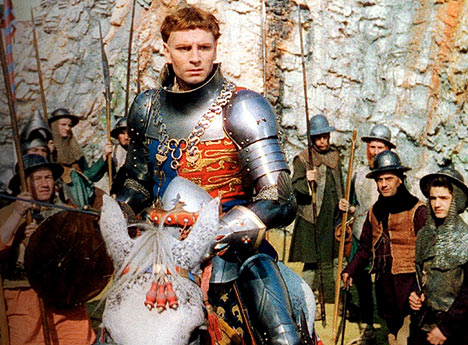
The Caneus Empire is a feudal society that I like to think as something resembling 12th through 15th century Europe. It mixes elements of the Hundred-Year War (England and France) with some High Chivalry elements. These elements mix in a climate that is rugged, mountainous and cold, this reminds me of what I would expect in Finland, Norway, or Sweden.

Members of the lower classes, live in poverty in the harsh weather. The nobles frequently live among their people, sharing a common lot with them. Few nobles spend much time away from their people as bandits, wolves and other dangers constantly demand their attention.

The Trials

While not given to the romantic ideas that led to the myths surrounding the Knights of the Round Table, the idea of quest and trials is one that permeates the entire society. Everyone, from slave to emperor, is expected participate in a number of trials throughout their lives. These trials vary depending on the position.

Young Canean nobles frequently leave their homes to test themselves, to explore the world and return with a wider world view. Many do not return.

The Army

The Empire has a long tradition of militarism. Every noble is expected to provide military service at the call of the Empress. There is a fair amount of competition in doing so and few nobles would refuse to serve if called upon, their honor demands it.Younger nobles, both male and female proudly serve the empire. As they grow older and have obligations to their lands and people many leave imperial service to retire to their lands. Many still have fond memories of service and frequently regale others with war stories by the fire.

Peasants are formed in large, undisciplined units who are frequently only expected to stand there and fly their lord’s banner. They are engaged in battle only to sweep the enemy off the field, once the knights have secured victory.

Tuesday, October 18, 2011

[Avatar of the Kaga] The Arman Protectorate

A nation that immediately caught my eye and filled me within inspiration was the Arman Protectorate. Proof of which: a number of adventures are set in the Protectorate OR deal with them. The Protectorate has a long history of bloody conflict. From the days when Abaddon – the lands now occupied by the Protectorate – was ruled by the First Ones to the days to the Sorcerer-Kings to the Arman to the Twilight War and onto today, Abaddon has been shaped by war.

The current Tsarina is the descendant of a family that has ruled the Protectorate for five centuries, the Kryszkas. Under the Kryszkas dynasty, the Protectorate underwent massive changes. From a land ruled by barbarians, they have forged a nation that share a common faith (the Sanguine Covenant), they have fought and repelled many Dominion attacks, and they ruled over the transition of the Protectorate military from a raider-based force to a well-organized machine backed by the power of the ironforged.

Not as powerful magically as their neighbor and usual opponent, the Dominion to the west, the Protectorate instead chose to create massive constructs and a technology unique to Exodus: firearms. This gives the Armans an advantage their opponents do not have.

It is a secret that is closely guarded by the Forgers’ Guild. One they keep a number of assassins on the payroll to make sure the secrets stay within the Protectorate. Anyone who is not from the Protectorate who learns to use those weapons is targeted for elimination. The Forgers’ Guild and the crown both offer substantial rewards (in the 1,000s of silver pieces) for any such information and even more money (in the 10s of thousands of silver) as bounties for the heads of those guilty. The Arman have been extremely forthcoming with their money and few ignore that real information leads to real money. In short unless you are an Arman or working for the Tsarina, do not touch firearms.

The Tsarina

The beautiful Tsarina Anayanka Kryszkas has ruled the Protectorate for five years now. She is loved by her subjects as a shrewd diplomat, a liberal sovereign who holds the Arman traditions in high regard. Her policy leads towards expansion of the Protectorate, and Arman senators lobby strongly for the Imperial Alliance to allow her the right to send a massive force through the Ice Crags to conquer the primitive tribes that live beyond.

Currently unmarried, who the Tsarina will take as her husband is subject to a lot of speculation. Rumor has it that the Tsarina is involved in a secret love affair with Nasser ibn al’Aadim, brother of the Dominion’s Khagan. If such a wedding happen, the political dynamic of southern Exodus would be forever changed.

The Flavor

The flavor of the Protectorate is an interesting mixture of medieval Eastern Europe (Russian, Poland, Hungary, Kievan Rus) with elements of the XVIth and XVIIth centuries (firearms). This mix really creates an interesting flavor. The guns and more technologically advanced elements mix in with a traditionally barbaric origins. Oh I would love to know how to draw!

The nation itself is built around a central, autocratic ruler. However, the many provinces of the nation are controlled by powerful dynastic families who control vast tracts of land. This separation is not feudal in nature as each prince owns and controls his own lands. Thus although the Tsars have the power of life and death over all, family dynasties and power plays are not to be underestimated. Neither can they remove land from a family's control as it is possible in a feudal society.

Again... unique and interesting clash of classic elements

The Army

The Protectorate army may be the one army that includes the fewest number of spell casters. However, its military boasts some of the most unique and colorful specialists of every army. The Protectorate's army is mostly "conventional" in its composition: its main forces are composed of infantry with cavalry used for support.

However, it also includes a number of powerful specialists that augments the fighting power of its armed forces. These includes the Peacekeepers (a unit of fanatically devoted warrior raised from childhood to serve the Arman crown), the Artillerists (masters of artillery and able to control constructs) and the ironforged the hulking arcane constructs. The combination makes the Protectorate army quick, numerous and hard to defeat in a single battle.

This creates a very unique mixture of miniatures to use for the modeler (and the artist, but I paint minis...) I see their basic outfits being similar to that of ancient Rus (the viking that established themselves between the Baltic and Constantinople).

Next: The Caneus Empire!

JP

Friday, October 14, 2011

Multi-Media JP!

This installment is based around a number of multimedia things I have done.

A few weeks back, Bill Woods asked me to go on the Enchanted Grounds podcast. Topics to include gaming, writing, and NeoExodus. However, we got off-track and talked about gaming in a number of ways. The resulting chat is very interesting. Check it out! You can find the podcast on the Enchanted Grounds website

The second multimedia offering I have today is the result of a unique situation. Last night, as my wife was at her night classes, I had just put The Boy down for the night. That was the time that I have to myself. So I went downstairs, got online and thought about not doing what I should've - such as completing my stat blocks for NeoExodus. Then I see a tweet that went like this:

Oh well I guess no one wants free artwork by yours truly. Not even enough to just hangout in a chat with me

Free artwork?! My interest was piqued.

So I replied and got onto Google Hangout with Kaitlyn Peavler (@thedandmom on twitter). She and I chatted a little for a while as I procrastinated. She shared her screen upon which I could watch her draw. I do not know why, but I like to watch people draw or paint. So I watched as she drew... Suddenly, I went "Are you drawing ME??? Turns out she was! We kept talking as I saw a cartoon version of myself appear on the screen - talk about hypnotized.

A few short minutes later, she send me the following drawing. I really look nice and thin! Thanks Kaitlynn! Check her out and follow her on Twitter (@thedandmom)!

JP

Thursday, October 13, 2011

[Avatar of the Kaga] Races of NeoExodus, Part 3

Last post as the Avatar, completed the tour of the new races found in the NeoExodus book. If you missed any part of it, you can find Part 1 and Part 2 on this blog.

So having gone through the nine new races of NeoExodus, we came to a crossroads. A point where we had to decide what to do about two things: Humans and the Core Pathfinder Races (Elves and Dwarves).

Humans of Exodus

I will not lie and say one of the things that really drew me into Greyhawk and later into Golarion was the distinction and variety of human races. Their background and their history, along with their looks. I still want to play a caster from the Mwangi Expanse just because a caster with a shamanistic mask really appeals to me. Though the Dungeon Bastard says: Playing human is like choosing vanilla when you go to Baskin Robbins, I believe the flavor of vanilla matters, silky French and Italian delight have a common taste, but do not taste the same. Love to the Bastard, but he has a narrow view of the race.

The NeoExodus Campaign Book does not merely present “humans” as an entry. It presents six human subtypes, with details about their appearance, origin, common favored classes and alignments.

The human subraces are Arman (from Abaddon/Sametia), Cardosians (from the Abaddon River basin), Cordelian (from the deserts of Cordel), Khymerion (from northern Exodus), Nasian (from Nas) and the mongrels Sametians (from Sametia). Three races are also included: the jao, the original sametian and the sorceran who are either based on dead cultures or who live beyond Exodus. NPC entries for humans do not say “Human”, but use the correct subrace. Humans are the most numerous of all the races on Exodus and thus form the majority in almost every nation. Most of the human subraces are strongly tied to the nations they inhabit, that is by design. Going back to medieval times, You would find people with common ethnicity in one area.

Other Races

The short answer about those: they have been removed from NeoExodus.

But JP, I want to play an elf! I hear some of you whining to me. Where are the elves? Where are the dwarves? Halflings? Gnomes? Half-Orcs? Those are all cool.

We thought about that. Should we include or exclude them? A lot of positive on both sides…

On the plus side, adding those races meant that players immediately knew them, no need to re-introduce them. They appear in many different books and products and are well defined.

On the con side, the races of NeoExodus are very unique and are a definite selling point. We did not want to have to re-invent the elves or the dwarves for NeoExodus. Including them meant we would have to support them: include leaders, assign lands and a history to them. They would have to appear somewhat regularly in adventure and other products.

Louis and I angst much over the decision: should we cut them or include them? I was in favor of cutting them out and focus on the NeoExodus races. Louis was not so sure (and neither of us had an argument to resolve this). So we kept on working, leaving them behind, but not really dropping them. We pushed the decision to a later time.

In the end it was an adventure that had already been published than decided the matter. Since one of the NPC was a half-elf, we needed to include them. If you do not know me, I consider published material to be set in stone. Once some element of background is published, then we cannot change it without justifying it to the players. My strong preference towards dropping them took a blow. I could not drop them and forget about them.

I had to include them. I spent quite a while avoiding the issue, trying to come up with a way that would satisfy everyone. Explain that rare NPC, and give us an “out” to include further races.

Then inspiration struck (as I was working on the adventure).

A major element of NeoExodus is the Nexus Gateways. These gateways, as Louis explained to me are ancient magical portals that function well like Stargates (but don’t tell the studios). These are generally known and can be activated to and from given points. But like the teleport spell, sometime they malfunction. Or rather, they operate on their own. They activate and poof, a number of things appear. Often times those things are monsters, but sometimes refugees or surprised spell casters appear. These exiles from other worlds would thus have moved into ghettos and small isolated communities. Among these refugees we would find the elves, the dwarves and all the races a GM wants to include in his NeoExodus campaign.

Next: Nations of NeoExodus

JP

The Gods Hate Me

A while ago, I reported that I had sent in an entry for Chaosium's Adventure Writing Contest for Cthulhu Invictus (the Roman era CoC). Well it's been a long time. A very long time indeed... I sent my submission sometime in June or July of 2010! That was a long time coming... But better late than never! I have not yet received my copy of the monograph (and have sent a query to the good folk at Chaosium about it).

I am very happy to be counted among the list of winners, among which is my good friend Osk. I did not participate in 2011's contest, but plan to do so if Chaosium again hold an adventure contest in the summer of 2012.

My own submission used to be the first chapter in my Invictus Campaign. Yes, the one I abandoned. Why? It would've required 300 pages to explain what I planned to do and 500 to write the adventures themselves. However, there are a number of bright points in there. So I went through the original adventure, trimmed all the campaign-specific information and ended up with the final version. I was lucky enough to have play-tested that adventure twice. I really like it.

You can buy the monograph from Chaosium directly. Monographs are only available through them, not through your FLGS.

This monograph is the second Chaosium publication that features some of my own material (the other being 2009's BRP Adventures).

Check it out and let me know...

JP

Wednesday, October 12, 2011

[Avatar of the Kaga] Races of NeoExodus, Part 2

You can find the first part of this entry here. That first part covers the Cavians through the Gevet.

Kalisan

Like the Gevet, the Kalisans are a new race that arrives with the Setting Book. Like with the gevet, Louis and I talked a lot about this race and its potential inclusion. In the end, they were just too cool to leave out. Here’s why…

The kalisans are an offshoot of the calibans (see Monsters of NeoExodus: Caliban). Now the calibans are a race of cannibalistic humanoids (they eat any living things, not just other calibans). The kalisans are the more civilized members of that race. They are nomadic and travel throughout Exodus. Kalisans relish in battle and the thrill of combat. They have served as mercenaries for every nation in Exodus. Today, they are common in the jungles of north and western Exodus.

However, other races dislike them because of their cannibalistic ways (though they are omnivorous, kalisans can eat almost anything). A kalisan who eats the flesh of another might gain a number of bonuses, including skill bonuses to ability bonuses (there are a number of feats). Kalisans are definitely a unique race that presents a type of role-playing challenge not found elsewhere. They can gain power by consuming fallen foes… but will they do it? Is there a darker – yet unrevealed purposed to this? Does this power have a price?

Kalisans are medium creatures. They frequently fight beyond normal means and can run and keep force marching for extended periods.

Recommended classes: Fighters, barbarians, rangers and rogues.

Non-Recommended classes: Arcane spell casters.

Prymidian

The Prymidian are a race of red-skinned humanoids that have a supernatural mastery of language. Whether this ability is based in some innate magical ability OR in some form of minor psionic power is not clear. What is clear is that prymidians are able to speak with most intelligent creatures they encounter.

Their affinity with words is not the main thing they are known for. Prymidians have long tentacles that grow out of their forearms that can extend roughly another arm’s length. This ability gives the Prymidian some limited additional reach (some of the new feats in the book further modifies or enhance these tentacles). Prymidians value reason, research and scholarly pursuits above all. They frequently come across as aloof, arrogant and long-winded. Most prefer long words and intricately crafted sentences to simple words.

Prymidians are medium creatures with an ability to speak with any creature that has a language (but they do not gain or retain knowledge of the language beyond immediate interaction). They can also cast read magic at will.

Recommended classes: Bards, monks.

Non-Recommended classes: Barbarians, Divine spell casters.

P’Tan

I have to admit that the first time I saw the P’Tan, I rolled my eyes and went *groan* another catfolk race. But after I began to look at them a little deeper, I began to see there was more than meets the eye. They are not “just” catfolk, but they have a history that makes them unique and abilities that truly take them to a whole other level.

The p’tan were one of the slave races that fought under the First Ones, although not very numerous, the First Ones experimented on them and vastly increased their numbers by infusing them with energy from the shadow plane. Later in the history of Exodus, the P’Tan broke free from the First Ones and made their way back to Exodus. This late departure mixed with a healthy distrust of anything related to the First Ones, makes the P’Tan seen as untrustworthy and still linked with their former masters.

P’Tan are medium creatures with the natural ability to generate black lightning – they call shadowspark. Their otherworldly origin means they are outsiders with the native subtype. They see in the dark and have a natural affinity to fight against the First Ones. That close proximity with shadows and darkness make the P’Tans dazzled in bright lights. Feats in the book allow the P’Tan to modify their shadowspark ability from being a ranged touch attack to a number of forms, such as making them area of effect.

Recommended classes: Rogues, Clerics or Rangers

Non-Recommended classes: Wizards, Summoners, or Witches

Sasori

Sasori are a races of humanoid with scorpion features. Sasori occupy a niche that is very unique in all of Exodus… Though demand for other resources such as money, weapons, and influence wax and wane, the only resources in constant, ravenous demand is information. Sasoris are information peddlers, passing information back and forth through an unseen web. This makes them very powerful. Because of that power, other races both fear and need the Sasori.

Sasori are medium-sized creatures with a natural affinity towards vermin of all types. They have poisonous blood that makes most creatures unwilling to eat them. They are also great at skulking around.

Recommended classes: Monks, Rogues, Clerics

Non-Recommended classes: Bards, Sorcerers, Oracles, and Summoners

Next: The final installment in the series, including the dilemma over elves and dwarves!

JP

Tuesday, October 11, 2011

I have a minion!

In the weekly blog post for Pathfinder Society - which came a day late because Paizo had a day off on "made-up day" Monday (Canadian Thanksgiving). Lucky them. At least I got to watch my Montreal Alouettes qualify for the Grey Cup playoffs while here at work. (Check it out)

I have to say that the decision was not an easy one. With so many great volunteers, the field was vast. I needed someone who was known in the community. I needed someone who was in the Denver-Metro area. I needed someone who was a quality GM. I needed someone who had played a lot. I needed someone who was "store-neutral" (meaning someone not tied to a specific store who could move between them without creating tension). I needed someone with whom I could work to push forward my many insane ideas.

I have to admit that after putting down all those criteria, I was able to narrow down the field to three. In the end, approached Scott to me my left-hand man. Scott initially refused, but after I explained all my reasons and expanded upon why I chose him, he saw that he was the right man for the job. So to all I offer to you, Scott Crosson, my Venture-Lieutenant!

So Scott, as of today you can say:

JP

More NeoExodus News...

NeoExodus is coming... Finally... Here are some news...

First, you may pre-order your copy from Paizo. The info there should give you most hints as to what we have put in there: spells, feats, races, world gazetteer and more.

Second, Louis posted the WIP for the campaign book. I really like the composition and the style of the characters. They are going to be NICE. Especially the roaring enuka just seems massive. The characters on the cover are based on our Iconics: Nose-Cutter the enuka fighter, Freja the human Protectorate gunslinger and Karissa the P'Tan rogue. This is a work in progress.

JP

Monday, October 10, 2011

Organized Play People: Kitty Curtis [Arcanis, Living Arcanis]

The person who, at the time was really the face of Arcanis in the Denver area was Kitty Curtis. I met Kitty at my first Bencon where she wore those kitty ears – which I always thought funny. At the time, she was the RPG Coordinator.

Then LG was killed and I started to look for something else (Pathfinder was still a long way away) and so I showed up at one of the Thursday nights in Arcanis on a dark November evening. Yadda yadda yadda; I was hooked! Kitty and her crew (Gregg, Ryan, Calvin and many others) kept feeding me my monthly dose of 3.5… We kept playing until we finally called it quits this past September. A number of reasons are involved (which is not the goal of this post).

JP: Hi Kitty and thank you again for participating in this interview.

KC: You're welcome JP! Always glad to do an interview that doesn't involve me on camera.

JP: I had a long chat with Peter from PCI about the new Arcanis system [link]. I wanted to do this interview with you is to focus on the organized play aspect of the new Arcanis system, not so much the system (cursed be ye d12).

KC: Just a note - I personally don't like using a d12 to track what tick you act on next. A decent d12 doesn't have the numbers next to each other, which makes it really awkward. Pen and paper works great for me, and there are a few different versions of the Action Dial running around, although my favorite is to use one of those little clocks that teach grade school kids how to tell time. (The hour hand can even be used to track strain/recovery.) I'm loving the GM Master Clock I have - I'll show you next game.

JP: If you allow me, can we talk a little about the old Living Arcanis (LA)?

KC: Sure!

JP: Can you give us a history of LA?

KC: The old Living Arcanis had a couple of different phases. We started with the 3.0 OGL, and the main difference between Living Arcanis (LA) and Living Greyhawk (LG) was that there were no regions. Sure, there were different geographical areas that events took place in, but every adventure was available to every player without having to travel in the real world.

Then Wizards of the Coast (WotC) upgraded to 3.5 LA held on to 3.0 for quite a while - Paradigm Concepts Inc (PCI) had put out new crunch products and wanted to continue to let players use them without having to pay for an "upgrade". The existing Campaign Staff started to get a little bogged down, and sought to share the wealth, so they introduced the Invisible Kings program. Groups of players and writers were invited to apply. We were to choose a region or secret society and flesh it out, and provide 1-2 years’ worth of outlines for adventures. To take the load off of campaign staff, each group of 3 or more also edited and play-tested our own adventures before sending them to another group for review, and then to campaign staff. In addition, as the campaign ramped up towards its grand finale of high-level play, the Invisible Kings were tasked with continuing to provide adventures for low-level play so that new players would still have adventures available to them, as well as having more localized plot lines for new players to wrap their heads around while learning about this amazing setting.

JP: Then 4e came along…

KC: Then WotC officially announced that 4e was forthcoming. The new 3.5 supplements were once again made obsolete, and it was clear that PCI needed their own rules set if they wanted to be in control of their campaign. Now, I was initially in the camp of not wanting to learn *another* rules system, but I have to tell you, once I started experimenting with the new system, I saw just how much of the old rules system was dedicated to squeezing Arcanis into d20 rules. (At the end of the last arc, our rules document was 79 pages. 79 pages! In the new campaign, we argued for a week whether we *really* wanted to move from 7 pages to 8 pages, including the cover page.)

JP: What other elements did Living Arcanis introduce that were unique to it? I assume those are still in “Chronicles”…

KC: There are two things that I first saw in LA (and haven't seen in any other campaigns, but then again, I don't play them all). One was separating adventures into what we call Hard Points and Soft Points. Hard Points are essentially the core storyline of each arc, and we recommend they be played in order if at all possible. Soft Points are adventures that take place around the central storyline, and we try to label whether the events in that adventure take place after any other adventures. The first story line was a 6-year arc (which stretched across 10 years of real time), so it was really important for players to be able to see whether a particular adventure would make a good "pick-up" game, or whether they would be lost without back story.

JP: [Interrupting] I really like the Hard/Soft point system. So much so that we are introducing something similar in NeoExodus, a campaign setting I am working on… But continue.

KC: The second was the introduction of secret societies – organizations that characters could be a member of - and they might have additional information or goals that the rest of the party didn't have. Sometimes this was just to give the society an item that ended up in party treasure at the end, sometimes it would be a side mission, and occasionally it would put one or more characters in conflict with the rest of the group, which led to some really rich role-playing. They were a "love them or hate them" element, but those that loved them were devoted, and the campaign really played to that. A fair number of players joined a particular legion in the campaign, so they started to get more and more mention at the major events (Roleplaying Interactives and Battle Interactives). There's a large contingent that still has the very snazzy shirts they had made. (Hat tip to Legio Lex!)

JP: Can you give us your RPG-Pedigree?

KC: Well, I don't know that anyone really needs to care who I am, but if you want my gamer history: There are plenty out there that will always see me as a baby gamer. I was kept out of the boys' D&D games in high school, no matter how much I wanted in. Shortly after high school (1999-ish), a friend heard I was interested in playing and put me in touch with a group. We started with AD&D, (darned "rouge" skills!).

After a year or two of playing, when we started to lose players to attrition (in our case, marriage to non-gamers), a friend mentioned Living Greyhawk. A way to get more D&D time AND a way for shy awkward me to actually meet people I had something in common with? Score! I stayed up and read the 3.0 rulebook from page 1 through to spells and attended my first public game day (October Rebellion, in Valhalla's back room, where I met many of my close friends.)

Two weeks later I coordinated my first game day and two months after that I judged my first game. I picked a doozy Fright at Tristor, for those that know it. I was hooked. Over the next two years I judged 2-4 adventures a week, and when I worked the night shift, ran some midnight madness games to get more gaming in. I was furious when they got rid of the points system for GMs less than a week before my Paragon status would have kicked in. I started editing for LG (local, then core and ADPs), and considered Triad, but just couldn't fit it into my life. I started helping at conventions and running more game days.

Meanwhile a friend had been trying to pitch a new setting at me: Arcanis. I kicked and screamed and fought. I didn't have time to learn a new setting, I was too busy coordinating. Then he hit me where it hurt - he told me he needed me to fill a seat at a slot 0 (allowing judges to play an adventure before they run it), or the table wouldn't go off. So I put together a dummy character and decided I would just warm the seat outside of combats. That's where I made my fatal mistake – I listened to the plot, and it was all downhill from there. He loaned me his rule book and I devoured it that night. I judged Arcanis at the first convention in Denver during the first year of the campaign, then coordinated gamedays and the local mailing list, eventually became an Invisible King (or Queen, as the case may be), then Assistant Campaign Director, and now Campaign Director.

JP: Yep… The setting in Arcanis is why we play it… What other games have you played?

KC: As far as my laundry list of games I've played, there's AD&D, d20 3.0 (variety of genres), 3.5 (variety of genres), a little 4.0, ShadowRun, Tales from the Floating Vagabond, The Window, Big Eyes Small Mouth, Vampire, GURPS, Primetime Adventures, Deadlands, Spycraft, a little RoleMaster and of course a couple of complete homebrews from when our groups got cocky and decided we'd make our own from scratch. I'll play just about anything so long as I have a pre-generated character and time, although I particularly want to try out Dread, Grimm, A Faery's Tale, Monsters and Other Childish Things, Savage Worlds, Veggie Patch, Pathfinder, Dogs in the Vineyard, Changeling and Spirit of the Century. I know I left some off of both lists. If I haven't tried, it, I'm game, once I have the free time. :D Oh, and board games, and video games when I had the time. But no CCGs or battle miniatures-I don't have the cash, much less the time.

More with Kitty next week.

Friday, October 7, 2011

Why I should not be allowed to draw anything

In case you did not know, I think my gaming expertise lies in the realm of writing and what I like to call scenaristic (how to make a good adventure). I would like to present you with an example of my computer-based drawing skills. As you all know, Louis Porter and I are in the process of completing the layout for the NeoExodus Campaign book.

Louis posted a trial cover for us to see the contrast and get an idea of the colorization effect. Here is what he posted:

I like the simplicity of the composition and the shades of grey really makes the logo pop. Many have commented on Louis's Facebook. About the boobs... Okay, the model is fine... as in <Ebonic>DANG GIRL! You FINE!</Ebonic> No worries. She is not gonna be the final cover girl. No, I'm not turning away from my love affair with female breasts. Those mysterious and glorious orbs are the two things that have prevented me from become a priest.

I gave Louis a series of ideas for the composition of the cover, to try and see how they would come out. So I tried to explain, but I got a feeling that he did not understand what I meant. So I opened MS-Paint and went ahead and created the following composition. (click on the pic to get a better view...)

Now you understand why Louis does not call upon me as an artist... The elements are three of the top villains of the setting: Makesh, Haru Anon and Nysska from the Folding Circle (major terror organization) and the Sphere, is nothing other than the Annihilation Sphere... A nice apocalypse device I wrote the background for... And now you know who controls it... I don't think my idea will make the final cut... But then again... it might be because of the art...

JP

Thursday, October 6, 2011

More on NeoExodus Races with Paizo's Advanced Races

Louis Porter posted his comments on the P'Tan using the Advanced Races guide from Paizo. Check it out on his blog

[Avatar of the Kaga] Races of NeoExodus

I’ve been talking about the unique races for NeoExodus to you for a while. Well, they are. As I write this, I am looking (on my other screen) at the finalized format of the Races of Exodus chapter of the book. NICE. (But don’t tell LPJ, it’ll go to his head.)

Cavian

The Cavians are a race of psionic rat-men. After the fall of the First Ones, they rose to prominence in what is not frigid Nas. The Cavian race opted to explore the field of the mind and create what is now a hive mind. The goals of the Hive Mind are nebulous and unclear to most, creating fear and mistrust. This led to the War of Mind and Magic where the Sorcerer-Kings of Abaddon and the Cavians clashed in the biggest conflict since the defeat of the first ones. In defeat, the cavian retreated to parts unknown. Where they disappeared to is the topic of hot debate. About six decades ago, the Cavians returned to Exodus. They have since spread throughout Exodus where many see them with mistrust.

Cavians are medium creatures with a bite and a natural ability to detect thoughts. Cavians may be part of the Hive Mind or Severed. Their mere presence makes people extremely nervous, making cavians unwelcome in high society.

Recommended classes: Any psionic class, rogues and ninja (anything stealthy)

Non-Recommended classes: Divine casters (Cavians are not very spiritual)

Cynean

The Cyneans are a race of crystalline humanoids with a strong fascination with all things arcane. They are eager seekers of knowledge and arcane mysteries. They are stoic and calm. Cyneans hail from the non-Alliance island of Gavea but have migrated throughout southern Exodus.

Cyneans are medium creatures with crystalline bodies. Their bodies naturally manipulate arcane energies around their bodies to provide them with further protection. Some Cynean may manipulate the arcane energies to various ways.

Recommended classes: Any arcane casters

Non-Recommended classes: Divine casters (Cynean abilities focus around arcane power)

Dalrean

The Dalrean are plant humanoids, drawing from both heritage. They live in patches in the thickest and most remote forests of Exodus. Theirs is an extremely complex social structure that is incomprehensible to other races. Each patch is a nation in itself. Some dalreans sometimes leave their patch to travel the world, a concept they have difficulty explaining to others. Another unique feature about them is that they do not actually speak, sending spores that allow them to communicate with other life forms.

Dalrean are part humanoid and part plant, counting as both of the purpose of being targeted by spells or effects. They can make parts of their body glow and live only on sunlight and water, but are vulnerable to the environment.

Recommended classes: Druid, ranger or barbarian

Non-Recommended classes: Clerics, and classes that require a lot of study

Enuka

The Enuka are big, loud and powerful. Hailing from the jungles of northern Exodus, an enuka sees the world in terms of predator and prey. They seek to be the apex predator at all times. Enuka appearances vary wildly from one to the next due to the many mutations common to the race. Enukas themselves consider these mutations natural and do not have any prejudices. Some mutations develop later in an enuka’s life.

Enukas are medium-sized humanoids (but on the bigger side). Unlike other races, enukas benefit from different mutations that help them. Some are very big, others have tough furs, others can swim very well, and others have an oversize jaw. Creating an enuka character gives you a LOT of options to customize the character to your taste. No two enukas are the same.

Recommended classes: Fighter, barbarian, or ranger

Non-Recommended classes: Arcane spell casting classes.

Gevet

The gevet are a race that were excluded from the original “Races of NeoExodus” book for a number of reasons. After reviewing them, I gave them a partial re-do from the original 3.5 document and added them to the campaign book. They really add another dimension to the world. You know when sometimes you are missing something you don’t know you are missing? The gevet are that race. The more I read and thought about them, the more I could see the adding to NeoExodus.
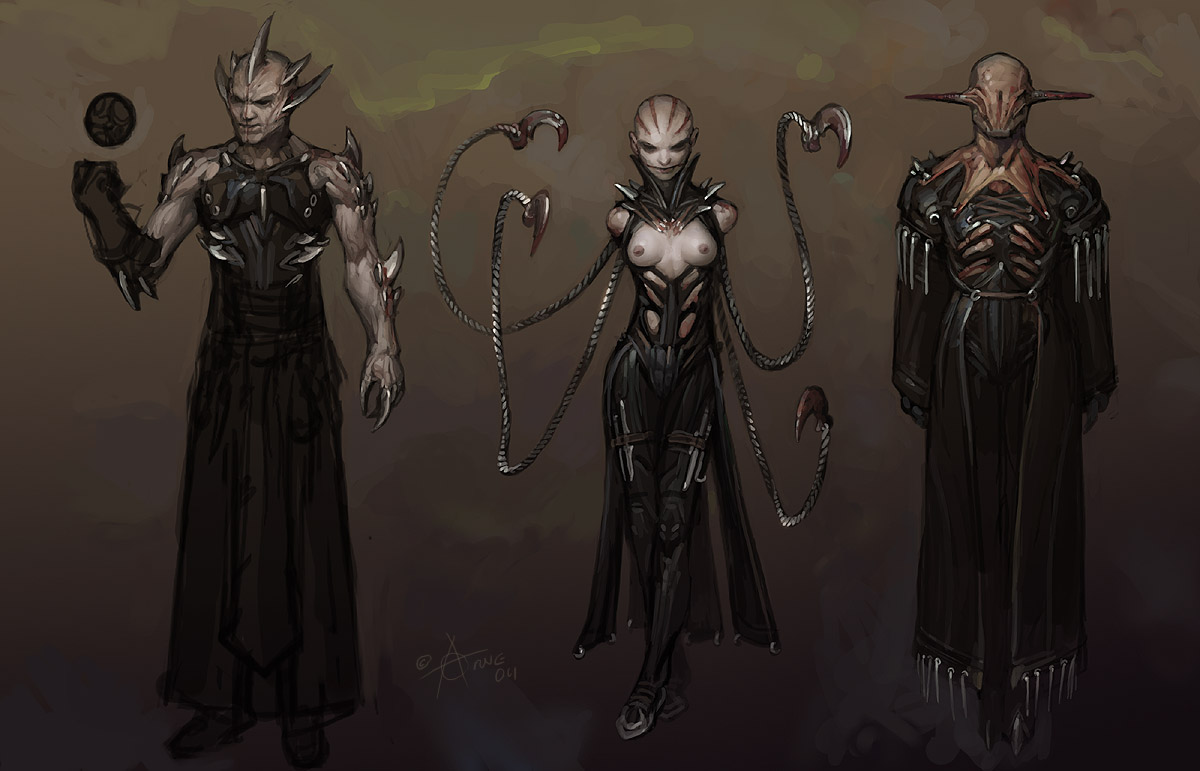
The gevet are a race of human/outsider hybrids hailing from the burning Cordelian Desert in the Dominion. Gevet are a type of tiefling native to Exodus. They have a reputation as being devious, aloof and distant from all others while females are seen as promiscuous and sex-crazed. Gevet consider family to be extremely important and females especially so. Women are held in great reverence and fertility is the greatest gift they can give the tribe. They are commonly involved in crime syndicates, kidnapping, slave trading and other similar activities.

Gevet are medium-sized outsiders and humans for any effect related to race. All gevet are resistant to fire.

Recommended classes: Males tend to be rogues, bards, or rangers. Females tend towards being clerics, oracles or bards.

Non-Recommended classes: Males avoid becoming clerics.

Next: More races of Exodus!

JP

Tuesday, October 4, 2011

[Avatar of the Kaga] The (many) inspirations behind NeoExodus.

NeoExodus is not the product of a single source of inspiration. Rather it is a sum of a number of sources merged into one.

I joined the NeoExodus crew after seeing a Facebook post by Louis. The post said he was looking for an author. I was looking to write. I had looked at his Obsidian Twilight setting and thought it was innovative, so I contacted him. He explained to me a lot of things, put the history of the world in my inbox and quickly got me working on something.

I liked what I saw. A lot. However, as I sat down to write my first NeoExodus adventure, the yet un-released “Origin of Man”. I remember having to go through a number of books and sources to find things I wanted to know: Who lives here? What are these creatures like? Why can’t I go here? What does that city look like? As long as I could ask Louis, things were fine. He knew the answers to my many questions. But the answers were scattered across a number of books.

After a while, I had enough and started working on the Campaign Book. I started with the history of Exodus, then expanding to the nations, then expanding into character options. This massive amount of work required me to dig in Louis’s mind to make sure I understood what he wanted. What the original book meant and expand that information so that a GM could run a game from that book.

In case you don’t know, Louis’ blog is named “In the mind of a madman”. He is many things, but a liar he is not. The name is very appropriate. Through these weekly talks, I was able to figure out what those many things meant and sometime add my own additional spin to it.

The Themes

Let’s talk a little about the themes of NeoExodus. I’ve frequently presented and defined NeoExodus as A traditional fantasy setting dealing with themes commonly found in Sci-fi.

Let that sink in.

. . .

Now, it’s a traditional fantasy setting because it is rooted in the common paradigms of fantasy: Sword-and-board, magic is present, deities grant spells and direct miracles to certain worshippers, there are humans and other races that have a common history (or a history of cohabitation). That does not mean “elves and dwarves”.

But it approaches themes generally found in Sci-Fi. Themes such as the nature of one’s humanity, the concept of loyalty, absolutism in religion, national loyalties, nature of good and evil, the role of man in the world. This does not mean D&D with laserguns either.

You will know that when I say “man” I mean “PC races”.

From such an ambitious overall theme, we went to work.

Comics

Louis is a HUGE fan of the comic book industry. I was a big fan myself long ago, but nowadays… Not so much. But I understand enough of the comic world to understand what Louis is talking about.

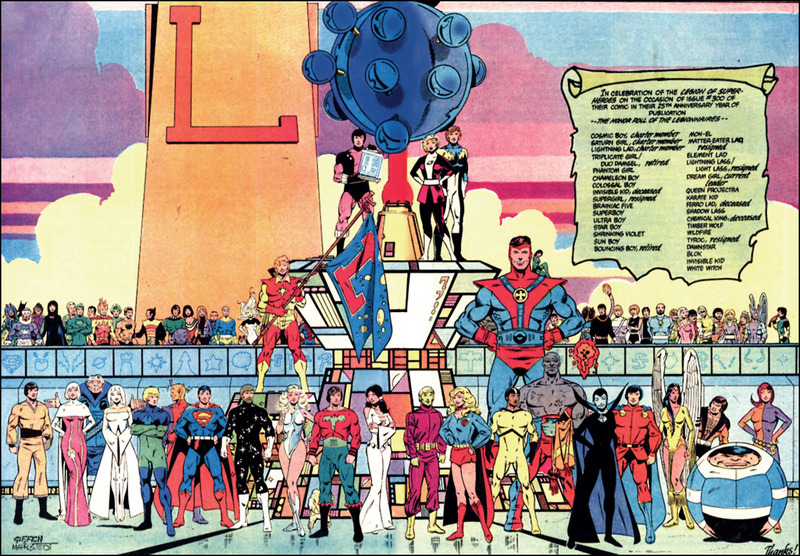
For example, he once asked “Who is our Magneto?” or “we need a group of villains that would serve as our Doctor Doom”. I also explained to him “NeoExodus is not the Legion of the Super Heroes, we need villains and things to have more than one-line in the story” (for added fun read his angry comments below. He’ll be greatly annoyed that I talked about LoSH, again, yes Louis, there are too many Legionnaires and 75% of them should be killed off-screen and no time wasted on them).

Comics are a great source of inspiration for both of us. Although he has a longer, more continuing history, my own love affair with the European Bandes Dessinées (such as Tintin) gives me a different perspective. The two of us understand each other on that, with different visions, but visions that complete each other. You won’t find Tintin or Superman in NeoExodus. Some of our villains serve roles similar to villains. For example, the First Ones (one of them in particular) serves as a sort of Doctor Doom. He is nothing like DD but he fills the role of “major, immediate menace.”

Speaking “comics” was definitely a gateway between us to convey concepts for certain things.

Movies

Sci-Fi and horror classics and not-so classics definitely came to minds. For example, I have told people that the First Ones were a mix of Classic Drow (not the sappy, angst-filled two-scimitar wielding bums, but the classic total evil bitch with web bikinis) and the Cenobites from Clive Barker’s Hellraiser.

Horror movies have inspired me, but not in what I would call a traditional sense. They have conveyed a sense of plot and feel. I think older movies (the Hammer movies from the 60s especially) had a way of presenting the situation and giving you a FEEL for where they were. Yeah, yeah the monsters were horrible and the plots barely holding together with twists that got the hot girl scream at everything. But I think they frequently did a better job to get me into the mood, or feel of a given location without ruining everything my showing me an obvious CGI landscape.

One of the “horror” movies that succeeded in conveying that feel what “Le Pacte des Loups”, “The Company of Wolves” for my non-French speaking readers. The French Trailer is much more appropriate than the English one (which seems like a non-stop action movie, which it is not). Just because that movie is just so awesome, I included the (French) trailer.

Scifi movies nowadays frequently double as horror films. Movies like “The Thing”, “The Fog” (by Carpenter) and “Aliens” of course come to mind as inspiration.

Other Settings

Anyone who tells you they have not spent a lot of time looking at “other peoples’ setting” is either a complete liar or someone who is doing the same thing as someone else.

Not us.

For NeoExodus, we looked at other settings that were out there: some still supported (such as Golarion) and some no longer supported for D&D/PFRPG (such as Arcanis), setting from other editions (Forgotten Realms, Greyhawk), and even setting worlds for like DC Heroes, Oeil Noir, Legend of the Five Rings and Doctor Who (NO, I won’t create Weeping Angels for Pathfinder). I looked through my own collection of old material for inspiration. I looked and analyzed the products before me and tried to distil these elements into half-formed ideas.

I know where we wanted to go. We had a general idea of what we wanted for the setting. Now it came time to see what we could add, what we had to leave out, what fit, what did not fit, what could fit but required a lot of work or justification. One good thing about existing products is that you can look at them thinking “If I were to write this; what would I put in the product?” What about their organization? What element do I think should have expanded upon? In short improve your product by comparison.

Inspiration does not only work from the “this gives me an idea” angle. Sometimes it’s “they did it [THIS] way. Let’s do thing differently.” And work from that design decision. In many ways, we looked a number of products with that optic in mind. Let’s not offer the same thing that is out there.

Other Games

Louis and I both play other games. We looked at settings for miniatures games, thought about the background of certain monsters from the Warhammer 40k universe, drooled and glossed over the Warmachine books (Louis does not want me to show them my Warmachine books) talked about Munchkin a few times.

Our approach of those games was similar to that of RPGs. What is so interesting about them? Why do people like them? We were not out there to create a mini skirmish games, but some elements and some of the coolest monsters in those settings, we imported and re-skinned with a new spin. Be prepared to see some miniatures from Privateer Press and/or Games Workshop at some of our events in the future… Okay, I already used some of my Warmachine stuff in “Encounter at Ramat Bridge” at PaizoCon and Fandemonium. Those guys make awesome minis… And I have them, so I’d better use them!

History

If you’ve been reading this blog for any length of time, my love affair with history is known to you. If not, well… now you know. History is a great teacher. Unfortunately most of us learned a series of meaningless dates and our eyes glazed over. But history is an awesome story book.

Like the world of comics, we used history as a way to create people’s role. For example, we can take a great military mind, like Julius Caesar and use him as a general. This general would be a shrewd politician and a careful planner. Another might be based on Alexander the Great: young, brash and extravagant. Another might take after the Cardinal de Richelieu, a shrewd politician who keeps his end goal in mind. The list goes on.

History has one great advantage: we know how it played out. How a given event can impact later events and events that originally seem completely unrelated. For example, how the Moroccan crisis in the early 20th century led to the First World War, which led to the rise of Hitler and the Second World War. There is a long list of events.

The history of NeoExodus is built around similar apparently unrelated events that eventually lead to something big. History of our world definitely served as a template for a number of moments in NeoExodus. Can you guess which ones?

Next: the races of NeoExodus

JP

Monday, October 3, 2011

Organized Play People: Cory Mills, part 2 [L5R, 4e]

Here is the final part of my interview with Cory of Heroes of Rokugan.

JP: What is the story of the Campaign, how did it go from Living Rokugan to Heroes of Rokugan?

CM: I am actually not the best person to tell that story. I took over the campaign from Rob Hobart, who formed Living Rokugan and ran it through the change to “Heroes of Rokugan”, so I feel a bit uncomfortable trying to explain what I know of the campaign’s history. I have heard stories, but I actually only joined the campaign five years ago (it’s been going on for ten), so most of what I could say would not be direct knowledge anyway.

JP: What game system is it? Last year I saw the promos for L5R 4e (and it was recommended by the above-named friends) what are the obvious differences between 3e and 4e (in Rokugan terms…) ?

CM: Heroes of Rokugan 3 uses the Fourth Edition. 4E is a lot more like 1E mechanically in a lot of ways. As far as setting is concerned, the rulebook makes a great deal of effort to ensure that a GM can run in whatever era of the game they wish. It is possible to run a campaign concurrently with the canon storyline, but it is by no means required, and there is a lot that can be done without paying any more attention to the meta-plot than the GM wishes.

HoR3, for example, is set in an alternate timeline precisely so that the players can have a chance to have major impact on the setting as the campaign continues. L5R can be a challenging system to run because a lot of the burden has been placed on the GM, but that allows them to use the rules to run the game that they want.

JP: What would you tell those out there about your campaign? Why is your campaign the best there is?

CM: Heroes of Rokugan is designed to give the players a chance to feel like heroes. As the campaign progresses, players have a chance to effect changes on the setting, and possibly the opportunity to rise through the ranks to positions of prominence in the Empire.

JP: Why do you think a complete newcomer to organize play should join your OP?

CM: Heroes of Rokugan has a community of players that share a love of Rokugan and the game, and are very welcoming of anyone who has an interest in L5R. Even casual players of the game can find a great rapport with our player base, and we have some of the most welcoming, generous players I’ve encountered anywhere.

JP: Why should an old grumpy player – yes… think of me as that grumpy old troll – what is the biggest strength of the OP?

CM: This campaign spends a great deal of effort on ensuring that player actions are taken into account for the development of the plot. Each module has a reporting window that allows home-run games to have an impact on the campaign as a whole, so that players don’t have to be at every major convention. While we do run exclusive interactives at some of our larger events, we are making a point of developing interactives that can be run by local groups as well.

JP: How did you become a campaign administrator?

CM: I was a fairly regular volunteer for the last campaign, and I had a decent working relationship with Rob. When he stepped down, I put together a team, wrote a proposal, and worked with him to coordinate with AEG. Maintaining a good relationship with the company that produces the game and the previous players of the campaign is one of my priorities, and their support has been invaluable.

JP: … And why did you become a campaign administrator? The glory?

As far as the “why” is concerned, I just found that I couldn’t let the community that I had become a part of during the previous campaign stop being a part of my life. I’ve made a lot of friends through Heroes of Rokugan, and when Rob indicated that he would be willing to help me step up, I could not resist the chance to keep the game going.

JP: What are you main duties as part of the campaign?

CM: I’m the one that makes the ultimate decisions. I have a support staff that helps me deal with day-to-day stuff and that coordinates specific things (like event staffing and mod writing), but the final responsibility is mine. I determine the course of the overall plot of the campaign and make the decisions about what rules we use, I decide what events we’re going to have a presence at, and every module that we produce passes through my hands.

JP: Do you have any links of websites where people might learn more about the campaign?

CM: http://heroes-of-rokugan.com/. Still being worked on; there’s a lot of stuff we’re getting up there as soon as a few technical issues get hammered out and as time allows.

JP: Thanks Cory… very informative.

Sunday, October 2, 2011

FOUR STARS!

Well... from the first Pathfinder Society adventure I ran at "adventure day" in December of 2009 to October of 2011, I have accumulated a total of 100 GM'd Society games. This makes me a four-star GM! Now the Five-Star treatment is the only thing ahead!

Then I guess I should retire? Hummmm Nah!

The "Lucky" adventure was 2-17 Shades Part 2 which I ran online for my buddies in Montreal. Almost didn't do it... Network issues... But finally, Marylin, J-F, Steve and Yves somehow survived the ordeal!

Since I knew many of you would not believe me, I took the liberty to take a screenshot as proof.

JP