JP On Gaming

Showing posts with label Inspiration. Show all posts

Friday, April 29, 2016

Indian food, a pair of ladies, a phone, and Napoleon

For a few days now, I have been in a rut. I have an idea for an adventure: encounters, a story line, NPCs, and an interesting development. However, I completely drew a blank with regards to how to tie it all together. Everything I thought about either felt flat or fell into the "already done it" bucket.

Neither held my interest in wanting to write. I played around and avoided doing much. Lucky for me, I had some editing to do, so I did that.

But my writing output has been low and slow... Not much to brag about. Oh things are still being worked on, but nothing is approaching the end.

Then today at lunch time, I sat down to eat at a local Indian restaurant I really like. A pair of ladies at a nearby table took a picture with their phone. Nothing there, people do it all the time. The spark of inspiration struck when one of the ladies said, "now it is recorded for posterity!" Perhaps it was the odd, yet perfectly correct, word that drew my attention, I will never know, but what remains is that I had my idea.

My mind wandered here and there until it settled on David's Coronation of Napoleon. Definitely my favorite painting of all time. It is both a grandiose work, but it also serve a propagandist purpose. What a great piece of work!

A little Google work and I had all the information I needed. Now to expand the concept, link the encounters and make it a coherent whole.

Thank you, Napoleon!

JP

Wednesday, August 26, 2015

Real-life wall of human skulls

I follow a variety of blogs on a number of topics I like. They include history, archeology, politics, and obviously, gaming. Every once in a while, one of these blogs comes up with something that really, really, gets my creative juices flowing. Quite frankly, had I written this from the depths of my mind, I would have thought of myself as a rather sick individual... However, history has a sick way of providing inspiration.

And the Aztecs deliver every time.

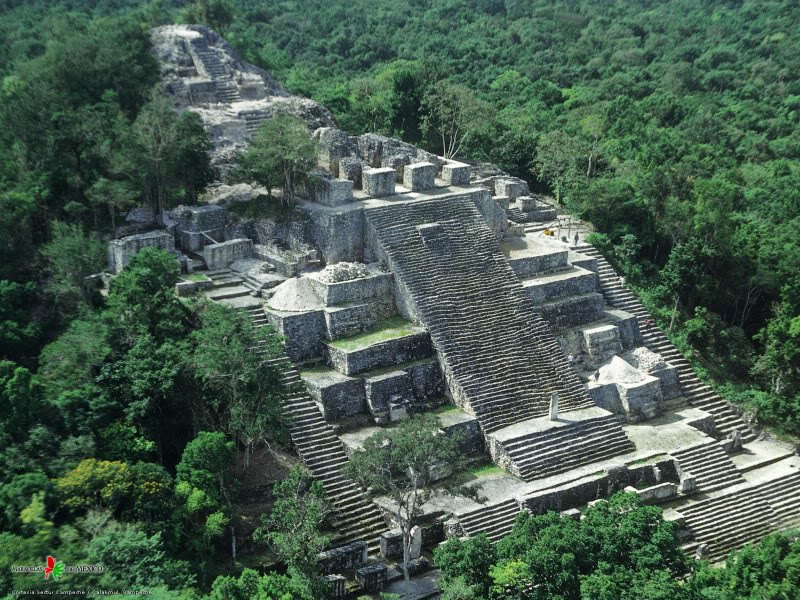
This time, the history blog reported the finding of a wall decorated with human skulls in Mexico! Not only men, but women's and children's as well. Creepy.

But beyond the creepiness of the whole thing, one has to wonder WHY they had done it. With our modern sensibilities, this horrific act would be something that would definitely bring terror. It does terrify me, in fact.

But could the Aztecs see MORE than the terror aspect of a wall of skulls?

Could it serve as a way to present their power? Could it display their wealth? Could it be a way to show the favor of the gods?

I have to assume that the people who passed by this wall every day would either grow accustomed to it or they would ignore it. What went through their minds?

"JP, you are reading way too much into this!" I hear many of you saying - with good reason. Well as I write about Saggakar, where such horrors are fairly commonplace, how the Aztec commoners felt about the wall of skull should guide me in how locals react. Numbess? Avoidance?

Perhaps I am reading too much into this...

JP

Friday, July 17, 2015

Five places I want to see (Bucket List)

For reasons unknown, have been making small lists of things that inspire me. Perhaps it is the frantic pace of my writing ToS1-I01 Memories of a Frozen Hell that has me thinking about some of my inspirations and dreams. This list focuses on real-life places I would like to visit but haven't yet, so it won't include "Middle Earth".

From this list, a number of runner-ups came to mind: Mexico City, Havana, Athens, Maui, Manilla, Madrid, Lisbon and Barcelona...

Rome, Italy The center of Christendom and a city filled with history and intrigue. I'm not talking of Dan Brown's excellent Angels and Demons, but back to the days of Napoleon, to the days when the popes were temporal rulers, to the Roman Empire. All that within the confine of one city. Rome, the first name I wrote.

Tokyo, Japan Ah. Tokyo. The "Eastern Capital" of Japan. Such a wonderful city and the site of so many kaiju attacks. While I have been in Tokyo before I honestly can't say I saw the city. Why? Because I was feverish at the time, having caught some type of disease. I did see Akihabara and the train station. But not the Imperial Palace, the castle of the shoguns, mount Fuji, etc. I have to go back!

Jerusalem, Israel The city of David is a place I have to see one day. As the center of three major world religion, it deserves the time to visit. I'm not just talking Hebrew history, but I am also talking about Roman, Egyptian, Byzantine, Muslim/Arabic, Medieval, all the way to the World Wars and the foundation of modern-day Isreal. I will admit that I am wary to go over safety concerns. But the dream remains.

Egypt The first major parent of Western civilization, Egypt is a place I always dreamed of seeing. From the Pharaonic age, to Alexander the Great, to the Successor Ptolemaic dynasty, to Caesar, to St Louis's Crusade. This is another land of history cannot help but visit: the pyramids, Luxor, Karnak, Alexandria, Abu Simbel... However, my concerns about instabilities as in Israel make this another dream.

The Moon, Space As a child of the 80s, I grew up with Star Wars and the hope that we would by now have colonized the Moon and be on our way to Mars and beyond. I always dreamed of flying out into space and explore or check out different and new things. Obviously, things haven't turned out that way and space colonization does not seem as much of a close reality as it did back then. There are no more space shuttles. *Sigh* So much for my dream weekend on the Sea of Tranquility...

There you have it: five places I would like to see. What are yours?

JP

Wednesday, July 15, 2015

Five places that inspire me

I was thinking of a couple of places that inspire me as a writer. I focus on a few elements of the place that give me different perspectives.

Now for this list, I chose only places I have been to myself. This list does not include place I want to go. They will be the subject of another list.

Chateau de Versailles , France For a whole century it was the center of the civilized world. Politically. Musically. Socially. It was at the heart of so many trends. It sponsored great works of art, awesome music, an architectural style that to this day signifies wealth and power. During my stay in France I must've gone there at least ten or twelve times. Each time, I was in awe of this chateau.

Washington DC USA The capital of the United States holds a special place in my heart. I first visited the city while I was in high school, a 10h+ bus ride. Next a few years later, I played in a DC by night with some guys in Ottawa (shout out to Raf & Shawn) where the group was involved in a number of plots. Including the city of Baltimore... a fun game it was. Forward a few years and I end up in DC again. This time in Reston, at the headquarters of AOL. There I trained for a week a few times. While there, I served as tour guide for my Irish coworkers, showing them the Mall, the White House, Congress, the Washington and Lincoln memorials. There is a pleasing aesthetic about the city. While what happens IN it is not as niceor clean, the heart of the city is beautiful: the wide avenues, the open spaces, the great monuments. There is something to be said about the city itself. If you've never been you are missing out!

The dirty politicking going on there is also part of the ugly fascination the city holds.

Nikko Mountain, Japan This volcano is one of the marvels of Japan. Among them are the many tiny monkeys that snatch and eat potato chips. These little guys are cute, quick, and unforgettable. The top of the mountain has shrines and shops. But the most enduring memory is the 3 hour drive DOWN. Along extremely narrow roads, the back of our bus occasionally suspended over nothing... I remember it well.

Vieux-Québec Canada It would be hard for me not to include a place from my homeland... A few years ago (okay now "many" years ago), I would've included Old Montréal as part of this list. But since I live in Quebec City for 2 years, the Old Capital took the cake. A true parcel of Europe in North America, the old town still has part of the old city wall and some of its gates (as pictured here). The history of the city, particularly during the French regime is still alive here. Yet, it also includes elements from the British, then Canadian regime. I have rarely seen a place that holds it all in such a small space. Vieux-Quebec conjures images of a town that evolved throughout the ages, retaining something of each subsequent era, adding to itself and making itself more beautiful for it.

Dublin Ireland In many ways what draws me to Dublin is similar to what draws me to Quebec City. However, Dublin is much older than Quebec. One of the element of the city is that the Liffey bisects the city. Much smaller than the St-Lawrence, it divides the city, giving it two distinct identities (at least in the first few blocks near O'Connell Bridge) : the business-like north side and the partying south side. This tale of two halves makes for interesting contrasts in a city.

Friday, May 22, 2015

Slavery in Saggakar and Legacies

I wrote a post long ago about this topic. And with Tyrants coming out I had to go over the subject again. I have recently been reading books of ancient history - most recently Plutarch's Fall of the Roman Republic which details the life of six very influential men. Marius, Sulla, Crassus, Pompey, Caesar, and Cicero. Very interesting read.

One of the elements that pop up frequently is that of slavery. Many of whom become elevated to freemen. One of them is an Egyptian general for Ptolemy XII.

Which if you have been looking into the ToS setting you know is a major concept. "Freedom is a lie" is one of the taglines. So this made me to think. In Tyrants of Saggakar, the First Ones care little about others. So they enslave everyone and force them to obey through whatever mean required. Make sure the slaves would keep their evil order.

Naturally no one wants to be a slave. We all want to control our own destinies. So how to make that playable?

The House Slave vs Field Slave distinction is one that is important. House slaves worked in or near the house while the field slaves worked the fields. House slaves with their attachment to the master's house do not make for good adventurers. And field slaves are kept under the watchful eye of brutal overseers. Neither of which have great adventuring potential.

So I need another type of slave: the envoy-slave. The envoy slave represents the master and travels throughout the land. Thus, they would be sent to work as envoys to their masters. This gives the players some measure of freedom, yet keep them in the system.

What kind of system would make people find slavery easier than freedom? After some thought, only one answer was possible: make freedom hard. Make it so one is freer under a yoke, that the benefit/ penalty is not in favor of freedom. But at the same time, it must not be impossible to overcome. This sounds just like the First Ones: this theme I have of evil usurping good, of freedom under an iron fist. It is really inspiring because it bakes in a lot of conflict to the campaign. And conflict create stories. And stories create adventures. And adventures creates campaigns.


So I did some research about cultures and slavery through Google. BAD MISTAKE. The internet is filled with stuff you cannot unsee. While I'm fine with consenting adults doing what they want... I am still a naive and innocent Canadian boy.

No more.

So how to use this knowledge into a game? No you pervs, not the sexual stuff. Sheesh really? I'm talking about running an RPG. Not porn.

Lowers head in shame, knowing what most readers are thinking of right now.


Next, how to give the PCs freedom in servitude? My idea of the envoy-slave really got traction here.

Simple: my boss is not over my shoulder all the time, micromanaging what I am doing. She tells me what to do then goes off to do other things. That's it. The First Ones would do that. Having multiple slaves, they would not be able or interested in micromanaging everyone of their slaves. Instead they would give commands which, in an organized play campaign is pretty much the "go here, do this" part. Where you are ordered to go somewhere for them. Thus allowing me to place the PCs in a location where "mysteriously" adventure happens.

This gives me the chance to include the masters in the campaign, at which time they would be more directly involved in what is happening. Much the same way patrons were in NeoExodus: they would be distant most of the time, but occasionally be major actors in what was going on.

So slavery is alive and well in Saggakar. After all, Service is Eternal and Freedom is a lie!

JP

Wednesday, April 1, 2015

Five inspirational songs for writing

The following list was compiled by looking at my playlist for songs I found put me in the mood for writing. Oddly enough many of these songs are not my favorites by these bands.

To make the list, a song had to be on my playlist for at least one year, had to be a song I look forward to, and it has to evoke something that sparks my imagination.

There are many great songs but I had to limit myself to five. Its a lot harder than it seems.

Genesis The cinema show It might be possible to read a lot into the sexual theme of this song as to the reason it is on this list. However the truth is that I find the instrumental piece in the middle just awesome. Phil Collins' drumming is spot on. And this awesome piece just keeps going on and on. The awesome doesn't end.

Lost Horizon Cry of a restless soul This song - just like Twisted Sisters' We're not gonna take it should never be listened to at work. Daniel Heyman's screaming is just great and delivers the song with drive. I find myself thinking of adventures and overcoming tyrants.

Marillion Grendel How can I pass by this 20+minutes epic. With Grendel, the monster of Nordic lore returning to Hroatgar' hall for its revenge. However the beast is back to avenge the slights mankind blamed on it. And let the blood flow.

Chris de Burgh Revolution/Light a fire/ Liberty There are few songs I know that can detail the revolutionary's plight than this one. This three part epic goes from the whispers to the shouts to the soothing words.

Iron Maiden Fear of the dark This is the song that really grabbed my attention. This paranoia story about things crawling in the dark always fascinated me. Back in College, I used to conclude my radio show with it.

Those were five songs that get my creative juices . What are your inspirational five?

JP

Sunday, March 29, 2015

[Historical Figures of Renown] Richard III

I don't know how many of you have followed the recent saga of Richard III of England.

A short recap of the story: Richard died shortly after the Battle of Bosworth in 1485. In 2012, a corpse was unearthed while work was being done on a parking lot in Leicester. They ran DNA test and the remains were found to very likely be those of the dead king. Richard was interred today in Leicester. His re-burial led to something of a period revival. Not only that, but the search for Richard's descendants and the story of Richard himself has been a story like one finds only on made-for-TV-movie.

Except for Richard did not come back to life.

And he didn't look like Dean Cain.

So, Richard was the last king of the House of York (whose symbol was the white rose), and he was succeeded by Henry Tudor of the house of Lancaster (whose symbol was the red rose). England's symbol, the red rose comes to us from the 15th century.

Today, we know him best through the Shakespearean play that bears his name where he is presented as a hirsute, power-hungry, vile, and deceitful humpback ready to do anything to further his own cause. Great for a play, a clear villain without any true quality. A mastermind of evil. By the way, it is a delightful play, perhaps a tad long, but awesome in so many ways. I recommend one of the many film adaptations, Sir Lawrence Olivier's remains a personal favorite. The play has everything: Murder (after murder after murder), betrayal, conspiracy, a major villain as a protagonist, angry vengeful ghosts, and combat. I easily rate this one as my favorite of Shakespeare's works.

So what makes the discovery of the body so interesting?

First off, the play leads us to believe that he was abandoned in a ditch. The burial site, in the former Grayfriars monastery, indicates that the former king was not just dumped and forgotten. I did some quick searches and he was buried in a chapel. So much for the ditch.

Was he a hunchback? The archeologists made some tests and found that the body did show that his spine was indeed crooked and that he would be standing with one shoulder clearly higher than the other (I keep thinking of Jonathan Frakes' stance). To a medieval person, he would indeed look like something of a hunchback. Shakespeare scores one.

Did he have his nephews killed? (The tower princes) This one will forever remain unclear, but the evidence and circumstantial evidence is very plausible. As long as Edward the Fifth lived, he could never ascend to the throne. Did he order it directly? Indirectly? Or was it done by an ambitious devoted? An opponent trying to paint him as a villain? That much is hard to say, but history certainly puts the blame on him, and he definitely received the bulk of the rewards from his nephews' passing. I'll give Shakespeare the point.

Was he an ignoble, abject person? Here again, my history research leads me to a more middle of the road view.

Was he prone to scheming and plotting? It seems so. During his brother's reign, he switched sides more than a few times, even joining the enemy house of Lancaster under the Earl of Warwick, before returning to his brother's side.

However, before he became king, he acquitted himself well of a number of tasks. He was a general before he was eighteen. He participated in the crucial battle of Tewksbury, restoring his family to the throne. He seemed to have had a sound military mind.

Using Richard III in your game

All of the above make Richard a very very interesting case for this series... Focus on one aspect and he is a villain. Focus on another and he is a genius.

As the Duke of Gloucester, Richard is clearly a schemer and a plotter, with a a fair amount of flair to do it. He can feel which way the wind blows and aligns himself with the likely victor. After all, for most of his adult life, he switched sides with some regularity.

Richard is a man who relied on his luck as he schemed and plotted his way to the top. However, once he got there, he seemed to have lacked the ability to maintain himself there. I suspect because he made too many enemies one his way to the top.

Richard is a man of drive. Someone who wants to get to the top and is willing to do what he needs to, to get there. He's got the skills.

As a king, he's someone isolated. His only legitimate child died within a year of his ascension, leaving him without a clear and stable heir. And during dynastic conflicts like the War of the Roses, not having a sufficiently diverse and numerous issue is a sure-way to get yourself killed.

Richard had to fight against both his house and the Lancasters. He obviously reneged on some deals had to fight two rebellions during his two year rule.

In the end...

I am happy that during my lifetime, his remains were found, leading us to a re-evaluation of this man's life. After all, if history teaches us anything is that people are much more complex than what we find a play. It has to be reviewed and re-examined whenever new evidence is found. Applying Ockham's razor to the evidence and going for the simplest, and usually most likely explanation often leads us to review what we thought was fixed.

So in the end, rest in peace Richard.

JP

Wednesday, December 18, 2013

Historical Figures of Renown: Le Cardinal de Richelieu

When I was born, my parents lived in a small 'burb (used to be distant 'burb, not so much anymore) on the banks of the Richelieu River. This peaceable river flows gently northwards towards the St Lawrence. But if one goes south, one reaches Lake Champlain (and from there one can sail down the Hudson to New York).

The name "Richelieu" meant very little else to me.

But as I grew up, I learned of the man behind the River's name and always felt a strange attachment to him. I know it sound strenuous, but it is true.

The Cardinal was a man ahead of his time. A Catholic, he applied principles of that would one day be known as "Realpolitik", to steer France towards the Golden Age that would follow under Louis XIV. Unwilling to bow to the more powerful Habsburg who ruled Spain, Austria and the Netherlands, he allied himself with Protestant powers like Sweden. He sent ambassadors to Muslim Turkey. In North America, he expanded the colonies (my own family came here around the time the Cardinal was named Prime Minister).

Thus under Richelieu, we find the seeds of what would make France great for the next two centuries(ish). Through him and his iron-fisted rule also form the seeds that will destroy the house at the end of the 18th century.

He was a man of vision, but not an easy man to get along with. He does not take orders, but gives them. He was more powerful than some princes of the realm were. He made himself immensely rich, and continued the appeasement policy of Henry the Fourth while breaking the power of the Huguenots - allowing Louis the XIV to revoke the Edict of Nantes fifty years later.

I can see how modern day storyteller find in him a good villain, but really he walks the razor between friend and foe throughout "Les Trois Mousquetaires". He appears as a complex man with complex goals. He dislikes Ann of Austria (and though I do not remember, I believe he would have been in conflict with the Queen Mother at the time of the book), but his dedication to France and the King is unquestioned and undoubted.

For all these reasons, Richelieu is a man who makes a great ally/rival/enemy. He is nominally on the same side as the PCs, but his goals frequently put him at odds with them. The PCs have to walk a similar razor edge to avoid becoming him permanent enemies, and force him to act against them. More likely, they will act against one of his lieutenants, such as the Comte de Rochefort or Milady de Winter.

The "Richelieu" type is one of the NPCs that I like to use a lot and often in my own games. I find that it makes the world feel richer, especially when contrasting them with the more single-minded type who takes the more Manichean a "with me or against me

Using him (as an ally) perhaps the best and most interesting way to use him. As someone extremely powerful, he has his own agenda and set of goals he wants to accomplish. When planning elements of the campaign, think of ways for him to be "mostly" on the PCs' side, but every once in a while, their goals are at odds with each other, over a third party. They all know they are on the same side - mostly - but not on this.

Using him (as an opponent) as a man of power, he cannot "simply" be removed with major consequences. Here we are not talking about beating down his door and exacting some righteous revenge. He is a competent stateman and his removal may not bode well for the faction the PCs support. Like him as an ally, he is likely to make overture to his enemies to work together against a third power. Yet he would work tirelessly to promote his own goals.

JP

Tuesday, December 3, 2013

Historical Figure of Renown: Josef Stalin

When I started this list, I tried to think of people whose name should be known by everyone. Stalin's name came up. I won't make any attempt at trying to present him as a benevolent dictator or someone who was just misunderstood. Stalin was a monster and a madman. He is the first "warning to History". Stalin is proof of the madness the Cult of Personality engenders.

It is interesting to think what Russia might have become in the hands of someone who was less of a mad ogre. While the fall of Imperial Russia was inevitable, the transition into a constitutional monarchy or a (non-communist) republic might have redefined the 20th century and the poles of power in the world. Stalin prevented that and preyed on his people to feed his mad desires and ruthless ambition. What could a gentler Soviet Union have done for mankind?

As I said an interesting exercise.

To me, Stalin is the ultimate story of the Lieutenant-taking-over, not the man who got there as the head man. Stalin rose to power in the shadow of Lenin. As a kid, I read "Tintin au pays des Soviets" and that was a major influence on me. Hergé's book reveals a number of things about the Soviet Union and how they operate. As a child, I thought they were quite funny. But today... I just re-read the story and though while not the best of Tintin's it includes a few gems, such as the "vote" which I copied here.

At the time, I had difficulty understanding how/why a government would take these types of actions against its people. But with age came understanding.

Even after his death, Stalin's shadow loomed over the Soviet Union. At that time, the country was committed in a number of locations and it could not back down from a showdown with the US and the West. It had to stand strong for the sake of communism. Egos were involved and it would not be acceptable to simply give up. So the standoff continued, and even intensified. His mark would remain as both a stain and a mark of sheer will and determination. Even after Khrushchev liberalized the Union, there were still many who wanted a return to Stalinist politics.

Using him (Early days) Stalin was always a loyal thug. He was a good thug by all accounts, but a thug nonetheless. As a local leader of a larger organization, such as a thieves or merchants guild. He has a reputation for being ruthless and efficient.

Using him (Mother Russia's Husband) Upon Lenin's death, Stalin deified him, creating a communist messiah. Then he set about consolidating his power and removing any threat to himself and his power - real or imagined. It is this era that I think of whenever I imagine a government oppressing its people at the whims of a mad dictator.

Using him (Aftermath) The tyrant is dead, he made his nation powerful. His death does not result in a civil war, but rather a power struggle between those who seek to keep the same type of policies and those who seek to change - or modify them. How each factions plays their cards really gives us a lot of adventure potential.

JP

Tuesday, November 19, 2013

Historical Figures of Renown, Part 1: Caesar

I have been working on this list for a while. Each of the figures on this list should be household names. They are men (and a woman) of state.

As I built this list, I thought I could see good and bad points about all of them (except two). This duality is really what makes these historical figures so interesting. While they have not

Two should be considered "warnings to History".

These people I plan to present briefly and then how they can be used in setting or adventure design.

Like for the influence list, I ordered them randomly.

1- Caesar

You should not be surprise that I put Caesar on this list. His book "The Gallic Wars" appeared on my list of major influences. And I painted a number of Caesarean roman armies and enemies (many of which I sold prior to moving to Kentucky). Without him, it is unlikely we would've seen the rise of Imperial Rome.

From the moment he enters politics on the side of the Marian, his life is interesting: fighting Spartacus, the conquest of Gaul, feuding with Pompey and Crassus, the Social Wars, his affair with Cleopatra, to his brutal murder.

What makes him so interesting is that we have writing generally attributed to him and thus can try and divine who he was, two millennium after his death. I would love for my own writings last that long!

Using him (new politician) This is Caesar before 60BC. As a young man, he served in a number of position: he was a priest then a criminal then a military man. Clearly able and ambitious, he rose to power by making judicious and strategic alliances.

Always looking for the next piece of action, he is a man of many talents.

It is easy to see him as a patron or opponent to the PCs.

Using him (general) This is the Caesar of 60-50BC No longer a young man, but an accomplished statesman and general, Caesar is now a warlord whose triumphant conquest win him the envy and hatred of many, but beloved by his troops. Here we find him as a man whose ambition is still intact and who now has the means to pull the strings. Caesar is methodical, ruthless and acutely aware of his reputation and the imprint he will leave on history.

As a ally, Caesar is the shining star in the political firmament, out shined only by equally powerful men. By forming a alliance or coalition, he could easily rule a nation.

Using him (final days) Here we find Caesar on top of the world. His rivals are dead or subdued. He controls a vast empire. He has a lovely 25 year old mistress in Cleopatra of Egypt. Really, he has nothing to fear. But behind closed doors, plots are hatching, and the spoils of his empire split amongst the conspirators.

Using him (aftermath of murder) Caesar's blood had yet to dry that things were moving at a great pace: Mark Anthony's pursuit of the conspirators, Octavian's rise to power, the second triumvirate and the civil war between them.

JP

Tuesday, March 5, 2013

Inspirations for our Free RPG Day Adventure

If you followed my tweets the past two weeks, you know that I am hard at work trying to finish the "Temple of the Forbidden God", our Free RPG Day 2013 Kickstarter (as a shameless plea, if you haven't given, now would be a good time to do so while there is still time!). And finally last night I tweeted an "I'M DONE!"

Well mostly done. I have completed the first draft - the toughest of all drafts to finish - and am currently playing around with it, tweaking, changing and overall making better.

I will soon be contacting (me and/or LPJ will) our backers in Colorado to run a play-test of the adventure! Talk about a chance to get MORE than "your name in the book" but "to be part of the writing too!!!" So there I said it. Extra opportunity for goodies! Contact me and/or LPJ if you have a group of backers near where you live so you can play-test it for us.

Though these are not strictly part of the adventure, the following illustrations were more than instrumental in the writing of "Temple of the Forbidden God". For those of you familiar with NeoExodus, images of the wild Reis Confederacy should quickly come to mind. And you would be correct... Part of the adventure takes place in the Confederacy.

Part of my design, included a way to seamlessly integrate the awesome stretch goals we hoped to reach (Owen KC Stevens reached YEAH!). I can only hope that we reach Lee Hammock and Richard Farrese, two of the guys who did a LOT of work on NeoExodus in its initial incarnation. I would just LOVE to work with them and make "Temple" into something just MASSIVE.
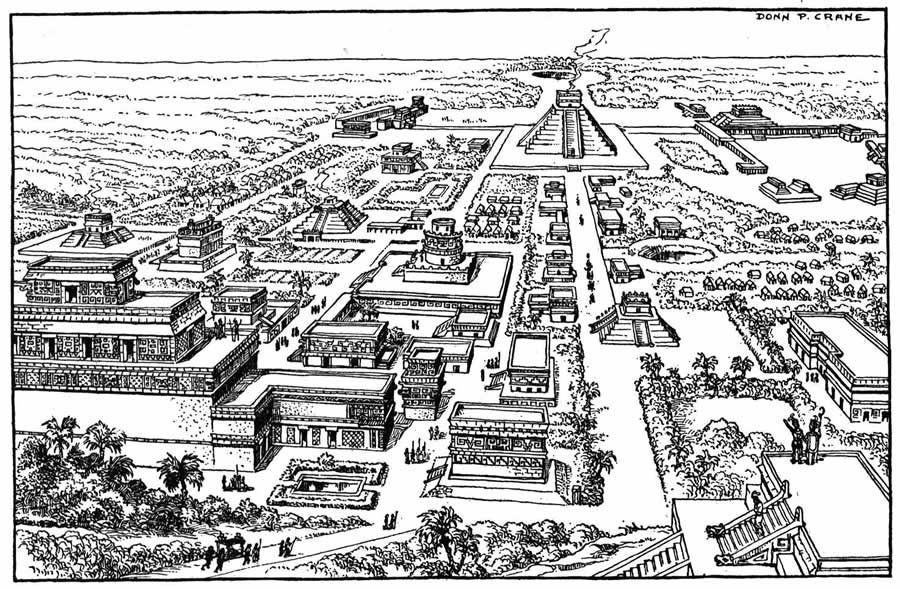
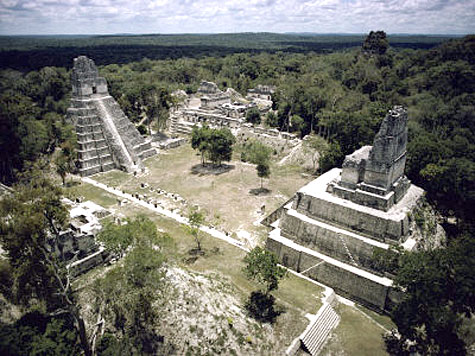
*Girlish giggle*

JP

Friday, November 16, 2012

Inspiration: Secession, Part 1

I'm not about to go all political on you. However, something I heard about that really tickled my fancy. Not so much for the act itself - I think it's symbolic more than anything. I'm talking about the petition for secession that has gathered signatures in all fifty states. Don't believe me? Read it here. It's more than "a few" people... And from both sides of the aisle (some want to leave, and some want others to leave).

Yes, I chuckled too.

Though I'm fairly certain there are a few of you out there who believe in it, stop. It won't happen.

But that's not why I'm here. This blog is not about politics... Well not "real-world" politics at least. That's just too sad...

However, in a setting where politics play such an important role, like NeoExodus. What would a secessionist movement be like in NeoExodus and what how would they go about accomplishing their goals?

A little background on myself, I was born and raised in Montréal, in the Canadian province of Québec. Yes, the province that voted to secede from Canada in 1980 (60% no) and 1995 (50.5% no). I've been a supporter of the cause for many years (though recently, I cannot support the political party that promotes it - it is too radical). My interest in history has led me to study a number of similar attempts at breaking away from another nation.

So as you can see, I have a wider interest in this. And just my luck: NeoExodus allows me to engage in these "what ifs" - of course changing the situation and the actors - but still the exercise is there...

If you read the NeoExodus Campaign Setting, you will quickly realize that there is one group that is clearly set up as a separatist group, seeking a return of the Cardosian Kingdom independent of the Dominion, Protectorate and the Janus Horde.

Let's examine four major factor that would play big in the equation.

Economic

One can never overlook the economic factor. Becoming a sovereign nation requires means for the nation to sustain itself. This means maintaining roads, maintaining and expanding military installations, and maintaining order and public safety. Another factor is population. Population will affect revenues but also the amount of resources a new lord must obtain to maintain his control.

Military

Military and public service is essential to any fledgling nation. Not only are nearby nation likely to try and test out the "new guy", but in a fantasy setting, there are threats that need to be handled. Adventurers can help (and it creates a lot of adventure possibilities), but they cannot be relied on to provide a permanent force.

Then one must factor the existing population, both as a basin of recruit for the army and public services. Protection is more difficult on a sparse, separated population than on dense, tightly packed population.

Political

The leanings of the leaders matters little, what DOES matter is that there is a clearly identifiable leadership. Whether this is a bishop, king or general, the important thing is for the common folk to be able to put a face on the new leader. This has the disadvantage of giving the opposition a target, but can clearly serve as a catalyst for the movement.

Social/Cultural

Finally, there is always something Socio-cultural that must serve as a focus for the change. People don't change their lives, government and religion without some major impetuous.

The one common thread of all successful revolution is that they started when things went REALLY bad. The French Revolution, the Cuban Revolution all happens win time when things were not going well. Hope is a nice buzz word, but it means very little when you have nothing to feed your kids or when you're out of a job and the taxman comes. Successful revolutions all start from the ground-up (grassroots movements).

Next week, I'll move on to NeoExodus and why I started this thread... The original post was just too long, so I cut it into two.

JP

Wednesday, September 8, 2010

Fairs and Festivals: Part 2


To my previous post about Fairs, my good buddy Van, posted the following as a comment on Facebook.

You may want to consider including an auction for livestock. Seems like farmers would want to take the chance to buy/sell animals when gathered together as a matter of convenience.

That is very true. While at the fair, I saw a number of animals for sale: cows, horses, goats, sheep, pigs and house pets. I must admit I did not pay close attention – allergies you see. I’m certain that many of them found new homes.

In a medieval/fantasy-style fair (or even in sci-fi locations), animal and livestock sales and auctions are a prominent feature of the fair, something that draws a lot of people to the event. Prized and sturdy animals are highly-sought and their sale value subject to much debate and tension. In addition to cows and goats, a fantasy fair could offer sales of high-quality riding dogs, trained baby wyverns, a pet lizard and a number of other creatures.

Dare I say that some competition could result in rivalries, potentially leading to sabotage, conflict or even murder? Aren’t those the basis of good adventures? A simple emotion sparks a story that writes itself. Often, the world does not need to end for adventure to creep in.

Thanks Van! Great comment.

JP

Monday, August 30, 2010

Fairs and Festivals


Every year, year, I take my family to two big events here in Colorado: the Renaissance Festival (in Larkspur, Co) and the Colorado State Fair (in Pueblo, Co). I enjoy both those events (even if my wallet does not). It’s a time to spend with my wife and the kids (and the occasional family and friends). Do something that's different than our everyday routine

Driving back from the state fair, I began to think how I could use what I saw/did to help make my adventure better, to breathe life into it. You see I am currently writing an adventure that uses a major fair/festival as its background. I wanted to see if I could "medievalize" my day's visit. Without any books or actual references, I tried to break down the fair into a number of elements (everyone else was sleeping in the car so using that time for gaming allowed me to stay awake).

How different were medieval fairs to the one I just attended? What elements of the fair were the same? Which ones were different? How did they differ? How could my experience add details in my adventure? Assuming I were a "typical" inhabitant (which I am), how would I react to impromptu events?

So I tried the following break-up.


  1. Performers This group includes acrobats, jugglers, dancers, even painters. Entertainers perform a variety of stunts and acts of daring that amazes and fascinates the common man. I am a sucker for jugglers myself because I have tried a number of times and… well I write RPGs.

  2. Tasty/Unique Foods Nothing to say about how good there are for us. Corn dogs, funnel cakes, turkey legs and the other dishes make those events stand out. Every year, I keep my stomach open for a turkey leg and a corndog.

  3. Vendors Another staple includes vendors. Many offer items one does not find in their usual stores. While many vendors are just outlets for the local big-wigs (like the phones or cable companies), many are quite unique, and are what I seek out most at the fair.

  4. Animals While some animals fall in the category of Performers, animals also include those involved in competitions, and the every-popular petting zoo. My kids LOVE the petting zoo and seeing the little piglets, horses/ponies, goats and bunnies. I will admit there is something about watching or petting animals that call to the kid in all of us. I personally find the horses to be quite nice.

  5. Musicians Concerts and music are an intrinsic part of those events. I will sit and listen to a few tunes from a country music band, then walk up to a Latin band and then to a rock band. Music is everywhere and to me, it helps create the event. Many of the tunes there are not my usual bands, and that makes it special.

  6. Competitions/Contests From lumberjack contests, to animal rustling, to sandcastle building, to animal judging to the local radio station madness, contests involve people or animals performing and winning prizes. I would generally not travel to witness a number of competitions that take place at the fair, I stop and watch kids run after a sheep or lumberjacks speed cutting a log.

  7. Games The Simpsons gave us The Carny Code which was a great episode. Those are games that involve throwing a basketball or a baseball or placing rings on coke bottles. I was never very good at those so I do not participate (one of the few things I can save money on).

  8. People The biggest reason to attend local fairs? People. Lots and lots of people. The crowd is what makes everything come alive and binds all of the above together. A group of people watching something will draw you in to see what is going on. Walking around the fairground makes me feel as though I was part of something big. I also like the mix of people, races, influences all coming together without conflict. Everyone gets together at the fair, no matter their size, race, color, affiliation, or style. All are part of the event and I like that.

With some of those elements in mind, I drifted off to fantasy aspects of fair. How different would the fair be if magic and other fantasy races were present? However, I found that fantasy really added nothing to those basic elements of the fair. Sure, it added some unique extras, but nothing to add really. I could replace the horses with a pegasus, turkey legs with dire chicken (hummmm dire chicken drumstick...), or the acrobats with flying wizards, but the elements of the fair remained the same. The people of different color/background would become elves and dwarves and halflings and gnomes.

Looking back on the article, this will really add to my adventure. Not so much in the form of encounters or challenges, but in the form of flavor, minor elements and potential subplots.

Oh! And it made the drive home go really fast...

JP