JP On Gaming

Showing posts with label History. Show all posts

Tuesday, May 9, 2023

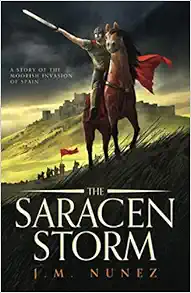
[Kinda Book Review] The Saracen Storm by JM Nunez

A random, impulse buy led me to check out this book on Amazon. I was not looking for anything in particular but I thought this covered a topic I did not know much about: The period of Post-Roman Spain.

This book is historical fiction in that it takes elements of the story we know and adds just enough to it to make it into something plausible.

Here, we have the story of Pelayo, bastard son of the Duke of Asturias. The plot weaves itself in a realistic way. One part that really felt forced was the women's escape from the Muslims, but it did not detract from the overall. It felt a little Hollywood-y, but fine.

I must say that I enjoyed this as what I see it: a gateway into doing some more research. The characters are interesting and realistic, with everyone seeing themselves as "the good guy."

The battle scenes are described well, from the perspective of a person who is present - so it is chaotic and unclear.

Now, having done some extra research, the events presented in the good as though they would happen within a few months-to-a-year took a decade. Small notch as a history nerd. However, not knowing that going in, I won't ding it.

How do I rate this? A 4 seems high but a three is definitely low. So I will settle on 3.5, which rounds out to 4/5. Generous but I can live with that.

Monday, May 8, 2023

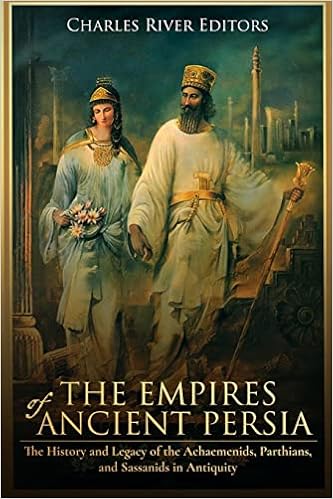
[Kinda Book Review] The Empires of Ancient Persia

Or its full name: The Empires of Ancient Persia: The History and Legacy of the Achaemenids, Parthians, and Sassanids in Antiquity by Charles River Edition.

I was interested in reading more about the three major Persian dynasties: The Achaemenids, the Parthians, and the Sassanids. Having studied their opponents: The Greek/Macedonians, the Romans, and the Byzantines, it is always interesting to read more about what happened. Understand both sides of conflicts allows for a more complete picture of what happened.

It's not just the war, but the social and religious aspects clarify what happened.

Well... This book is a good primer. It presents all of the above.

So why am I not excited?

This book is dense, heavy and without headers. It is illustrated with Wikipedia images that are effective but their main goal is to break the blocks of text.

The topics are approached but only skimmed before moving forward.

It's just... dense. Very much like a paper designed to remind people who already knew about the topic. Or a school/ college paper.

How do I score this? ... How indeed. I was not bored but I was not excited reading it either. It was 2/5, I did not find what I was looking for. Had I have no idea about the topic, I might have scored it higher, but not much. So dense, heavy, and definitely not entertaining.

Thursday, October 6, 2022

[Kinda Book Review] Ancient Japan by Captivating History

Book coverAs I am working on Ozaka, a fantasy Japanese setting, I wanted to read a few books on the history of Japan. Something to serve as a reference.

Not speaking Japanese, I looked around for a while before settling on this one.

This book was not what I was looking for... It delivers what it promises on the cover A Captivating guide to the ancient history of Japan, their ancient civilization and Japanese culture, including stories of the samurai, shoguns, and zen master. But it does not provide much more.

I found this book dry and lacking depth. If I had no basic knowledge, then I would've appreciated it more. But as it was, it felt like I learned very little.

This seems like a wonderful book to read while on a plane to Tokyo. Not for the type of research I was interested in.

So... a score... I am going with a 2/5. However, for those with less knowledge about history might find it a good overview and introduction an rate it 4/5.

Thursday, June 3, 2021

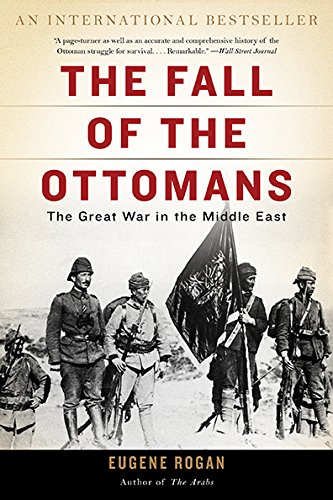
[Kinda Book Review] Fall of the Ottomans by Eugene Rogan

Christmas 2019, Santa brought me "Fall of the Ottomans" by Eugene Rogan. I had been wanting to read more about the Great War. World War I (WWI) was the event that - even more than its sequel - defined the world we know today. But that is a rant for another day.

Fall of the Ottomans covers the war, from the events starting around 1900 with the two Balkan Wars that first gave the empire a bloody eye, then gave it some prestige to the aftermath of the war.

When I started this book, I thought I knew about the Ottoman Empire, but really, I did not. At the beginning of WWI, the empire spaned from Macedonia to Georgia, to Iran, to Saudi Arabia and the whole of the Peninsula. Massive! Then add to this the many ethnic groups: Slavs, Turks, Armenians, Arabs, Kurds, and Palestinians. Muslims, Christians, and Jews.

You can find the details of the war elsewhere: Gallipoli, Mesopotamia, Egypt/Palestine. The Ottomans had an army that mixed regular "European"-style troops and irregular tribal troops with German assistance and support.

After reading this book, I grew to have greater appreciation and revulsion for the Ottomans. Admiration as they ground the British down in many campaigns: Gallipoli, Mesopotamia. Revulsion for their actions against non-muslim populations: the Armenians. Very much a mixed bag overall.

One of the thing that got me into this book more is the prose. Yes, it is a history book, but the writing is dynamic and ties together the narrative into something resembling a plot. I could not wait to move on to the next chapter, as if I was going to discover something (okay, many times I got surprised by what happened).

What is this book lacking or that I wanted more of... I would love to read more of the fallout of the war... what happened after? Now, there is a satisfying conclusion that describes what happens in broad lines. Short, too short.

So you ask me for a rating... I thought "4" but then got to think: why? What I wanted was not the focus of this book. The subtitle says what this book is: The Great War in the Middle East. So my wanting to know more about the early history of the nations created by the partition. Since those things are "out of scope" and "future reading," I must say that brings this book up to a 5/5.

Must Eugene Rogan books may find themselves on my future wish lists.

Tuesday, January 12, 2021

[Kinda Book Review] Herodotus - The Histories

If you ever take an interest in the history of Western Civilization, one name returns as a reference for others: Herodotus. Herodotus is the Father of History because he is the first who recorded history was a series of events based in the "real world" and not a series of events inspired by a divine source.

Now reading Herodotus is not like reading later historian like the drier Thucidydes, or even Plutarch. Neither is it a case of "1914 Start of WWII. 1915 Battle of Verdun. 1916 Battle of the Somme."

From the foreword, he was a travelling scholar, someone who talks about these things and is very adept at making side steps, then bringing himself back. For example, starts talking about Darius' campaign beyond the Ister (the Danube), all around the Black Sea. He then side-steps to give geographical information about the terrain, particuarly the rivers and their main tributaries, then goes on to talk about the origin of the people and their relations to others, before returning to his original point. (see. see what I did there?)

Many of the tales are quite sensational and it feels like Herodotus is reading from the National Enquirer sometimes, with tales of forced cannibalism, wife-trading, and mythological involvement. Definitely entertaining stuff, one funny thing is that the more far-fetched the story, Herodotus tells us he does not believe it himself.

Other times, he tells us of a few alternate stories and different version of the same tale. For example, he tells us the body of the Persian general Mardonius is lost after the battle Plataea. He gives one version, then an Athenian version of the story.

The core of the content is really the reign of the Persian kings written over nine books, including Darius, Cyrus, and Xerxes with a focus on their involvement in the Greek world. The book is filled with interesting details, a great resource indeed! I mean as near a first-person resource as we have on battles like Thermopylae (the 300 Spartans), Artemisium, Salamis, Plataea, and Mycale. Even if Herodotus is more interested in the story than the gritty military details, this book gives us insight into the way of life of the Spartans, the Athenians, the Persians, the Egyptians, and groups like the Scythians.

So, what did I think of the book? I will say I prefered the style of Plutarch over Herodotus but the size and quantity of material here is quite phenomenal. It dragged in parts. To rate this one, I waffled between a 3 and 4, in the end, I went with a 3.5, rounded up to a 4/5. I can get behind that, mostly because I think a 3 would not do it justice...

Friday, October 11, 2019

[Kinda Book Review] The Wars of the Jews by Flavius Josephus

This is a book I had on my list for a very long time, and I listened to it as a free Audiobook from Librevox.org.

For those who do not know, Josephus was a Jew who chronicled the world during and around the Flavian Dynasty (Vespasian, Titus, and Domitian). First captured by Vespasian, he was freed and served him during the campaign. So this book is a report by someone who party to the events described therein, not someone far removed from them.

Josephus began as a rebel general who fought against Vespasian in Galilee before being captured, enslaved, and then freed by him. So we deal with someone who was there, dealt with the situation and had first-hand knowledge. A few times in the narrative, he is sent to speak with the Jews to ask them to surrender to Titus.

There are seven books with the narrative beginning around 200BC, through the period of the rise of Christianity, to the naming of Vespasian as commander of the army to punish the rebels by Nero, to the Year of the Four Emperors, to Titus' destruction of Jerusalem, and the destruction of Massada which ended the war.

The First few books presents the wars of the Seleucid kings in Judea and the many regime changes in Judea: the one king, then the tetrachy, and the Roman intervention. A veritable who's who of the late Roman Republic pass through: Pompey, Caesar, Octavian, Antony, and Cleopatra all appear influencing the region. I was fascinated.

Like many, I knew of the region around that time was from the Christmas story: King Herrod and Salome. They appear here but in the context of the wider world. In fact, they seem to be mere local despots with limited power overall with the kingdom of the Jews broken into four pieces and each king named tetrach (ruler over a fourth (roughly): Galilee, Judea, Samaria, and coastal regions).

Josephus describes the area as a hotbed for rebellious activity: under the Greek/Seleucids, then under the Romans with only limited periods of peace in-between. Religious fanatics, corrupt and avaricious governors and family squabbles contributed to the destabilization of the area.

So the wars begin and the Jews enjoy a fair amount of early successes, ejecting the Romans from their lands and continuing the administration in place.

Nero assigns Vespasian command of an army to conquer the territory.

This is the part where we must be wary and apply some common sense. As Vespasian was Josephus' patron, the book from here on does a fair a amount of what I think is propaganda as the Roman commanders (particularly Vespasian and Titus) are always portrayed as fair and generous. Still the narrative is interesting and pretty clear.

I never visited Jerusalem or Israel but after reading this book, I can say I have a pretty good idea what the city looked like.

Josephus provides us with ample stories anecdotes - many of them absolutely horrible of the famine in the besieged city. The worse is that of the woman who cooked and ate her own son.

...

Yeah. That was hard.

This book demonizes many of the players in the who affair, such as the leaders of the Zealots. It is clear that he regrets the whole war and its conducts but at the same time he admires and commends the Jews for their courage and spirit.

Another fun thing... The narrative definitely reminded me of terms and expressions taken from the Bible, particularly the most historical books - such as the Book of Kings.

So this book came in perfectly as I received a new war game: SPQR which I cannot wait but try with ActionMan. It's an ancients skirmish game of which I'll post more later.

Rating? Really? You ask me for a rating of a book that held my attention for over twenty hours??

FIVE EAGLES (out of five).

Friday, April 29, 2016

Indian food, a pair of ladies, a phone, and Napoleon

For a few days now, I have been in a rut. I have an idea for an adventure: encounters, a story line, NPCs, and an interesting development. However, I completely drew a blank with regards to how to tie it all together. Everything I thought about either felt flat or fell into the "already done it" bucket.

Neither held my interest in wanting to write. I played around and avoided doing much. Lucky for me, I had some editing to do, so I did that.

But my writing output has been low and slow... Not much to brag about. Oh things are still being worked on, but nothing is approaching the end.

Then today at lunch time, I sat down to eat at a local Indian restaurant I really like. A pair of ladies at a nearby table took a picture with their phone. Nothing there, people do it all the time. The spark of inspiration struck when one of the ladies said, "now it is recorded for posterity!" Perhaps it was the odd, yet perfectly correct, word that drew my attention, I will never know, but what remains is that I had my idea.

My mind wandered here and there until it settled on David's Coronation of Napoleon. Definitely my favorite painting of all time. It is both a grandiose work, but it also serve a propagandist purpose. What a great piece of work!

A little Google work and I had all the information I needed. Now to expand the concept, link the encounters and make it a coherent whole.

Thank you, Napoleon!

JP

Wednesday, December 18, 2013

Historical Figures of Renown: Le Cardinal de Richelieu

When I was born, my parents lived in a small 'burb (used to be distant 'burb, not so much anymore) on the banks of the Richelieu River. This peaceable river flows gently northwards towards the St Lawrence. But if one goes south, one reaches Lake Champlain (and from there one can sail down the Hudson to New York).

The name "Richelieu" meant very little else to me.

But as I grew up, I learned of the man behind the River's name and always felt a strange attachment to him. I know it sound strenuous, but it is true.

The Cardinal was a man ahead of his time. A Catholic, he applied principles of that would one day be known as "Realpolitik", to steer France towards the Golden Age that would follow under Louis XIV. Unwilling to bow to the more powerful Habsburg who ruled Spain, Austria and the Netherlands, he allied himself with Protestant powers like Sweden. He sent ambassadors to Muslim Turkey. In North America, he expanded the colonies (my own family came here around the time the Cardinal was named Prime Minister).

Thus under Richelieu, we find the seeds of what would make France great for the next two centuries(ish). Through him and his iron-fisted rule also form the seeds that will destroy the house at the end of the 18th century.

He was a man of vision, but not an easy man to get along with. He does not take orders, but gives them. He was more powerful than some princes of the realm were. He made himself immensely rich, and continued the appeasement policy of Henry the Fourth while breaking the power of the Huguenots - allowing Louis the XIV to revoke the Edict of Nantes fifty years later.

I can see how modern day storyteller find in him a good villain, but really he walks the razor between friend and foe throughout "Les Trois Mousquetaires". He appears as a complex man with complex goals. He dislikes Ann of Austria (and though I do not remember, I believe he would have been in conflict with the Queen Mother at the time of the book), but his dedication to France and the King is unquestioned and undoubted.

For all these reasons, Richelieu is a man who makes a great ally/rival/enemy. He is nominally on the same side as the PCs, but his goals frequently put him at odds with them. The PCs have to walk a similar razor edge to avoid becoming him permanent enemies, and force him to act against them. More likely, they will act against one of his lieutenants, such as the Comte de Rochefort or Milady de Winter.

The "Richelieu" type is one of the NPCs that I like to use a lot and often in my own games. I find that it makes the world feel richer, especially when contrasting them with the more single-minded type who takes the more Manichean a "with me or against me

Using him (as an ally) perhaps the best and most interesting way to use him. As someone extremely powerful, he has his own agenda and set of goals he wants to accomplish. When planning elements of the campaign, think of ways for him to be "mostly" on the PCs' side, but every once in a while, their goals are at odds with each other, over a third party. They all know they are on the same side - mostly - but not on this.

Using him (as an opponent) as a man of power, he cannot "simply" be removed with major consequences. Here we are not talking about beating down his door and exacting some righteous revenge. He is a competent stateman and his removal may not bode well for the faction the PCs support. Like him as an ally, he is likely to make overture to his enemies to work together against a third power. Yet he would work tirelessly to promote his own goals.

JP

Tuesday, December 3, 2013

Historical Figure of Renown: Josef Stalin

When I started this list, I tried to think of people whose name should be known by everyone. Stalin's name came up. I won't make any attempt at trying to present him as a benevolent dictator or someone who was just misunderstood. Stalin was a monster and a madman. He is the first "warning to History". Stalin is proof of the madness the Cult of Personality engenders.

It is interesting to think what Russia might have become in the hands of someone who was less of a mad ogre. While the fall of Imperial Russia was inevitable, the transition into a constitutional monarchy or a (non-communist) republic might have redefined the 20th century and the poles of power in the world. Stalin prevented that and preyed on his people to feed his mad desires and ruthless ambition. What could a gentler Soviet Union have done for mankind?

As I said an interesting exercise.

To me, Stalin is the ultimate story of the Lieutenant-taking-over, not the man who got there as the head man. Stalin rose to power in the shadow of Lenin. As a kid, I read "Tintin au pays des Soviets" and that was a major influence on me. Hergé's book reveals a number of things about the Soviet Union and how they operate. As a child, I thought they were quite funny. But today... I just re-read the story and though while not the best of Tintin's it includes a few gems, such as the "vote" which I copied here.

At the time, I had difficulty understanding how/why a government would take these types of actions against its people. But with age came understanding.

Even after his death, Stalin's shadow loomed over the Soviet Union. At that time, the country was committed in a number of locations and it could not back down from a showdown with the US and the West. It had to stand strong for the sake of communism. Egos were involved and it would not be acceptable to simply give up. So the standoff continued, and even intensified. His mark would remain as both a stain and a mark of sheer will and determination. Even after Khrushchev liberalized the Union, there were still many who wanted a return to Stalinist politics.

Using him (Early days) Stalin was always a loyal thug. He was a good thug by all accounts, but a thug nonetheless. As a local leader of a larger organization, such as a thieves or merchants guild. He has a reputation for being ruthless and efficient.

Using him (Mother Russia's Husband) Upon Lenin's death, Stalin deified him, creating a communist messiah. Then he set about consolidating his power and removing any threat to himself and his power - real or imagined. It is this era that I think of whenever I imagine a government oppressing its people at the whims of a mad dictator.

Using him (Aftermath) The tyrant is dead, he made his nation powerful. His death does not result in a civil war, but rather a power struggle between those who seek to keep the same type of policies and those who seek to change - or modify them. How each factions plays their cards really gives us a lot of adventure potential.

JP

Tuesday, November 19, 2013

Historical Figures of Renown, Part 1: Caesar

I have been working on this list for a while. Each of the figures on this list should be household names. They are men (and a woman) of state.

As I built this list, I thought I could see good and bad points about all of them (except two). This duality is really what makes these historical figures so interesting. While they have not

Two should be considered "warnings to History".

These people I plan to present briefly and then how they can be used in setting or adventure design.

Like for the influence list, I ordered them randomly.

1- Caesar

You should not be surprise that I put Caesar on this list. His book "The Gallic Wars" appeared on my list of major influences. And I painted a number of Caesarean roman armies and enemies (many of which I sold prior to moving to Kentucky). Without him, it is unlikely we would've seen the rise of Imperial Rome.

From the moment he enters politics on the side of the Marian, his life is interesting: fighting Spartacus, the conquest of Gaul, feuding with Pompey and Crassus, the Social Wars, his affair with Cleopatra, to his brutal murder.

What makes him so interesting is that we have writing generally attributed to him and thus can try and divine who he was, two millennium after his death. I would love for my own writings last that long!

Using him (new politician) This is Caesar before 60BC. As a young man, he served in a number of position: he was a priest then a criminal then a military man. Clearly able and ambitious, he rose to power by making judicious and strategic alliances.

Always looking for the next piece of action, he is a man of many talents.

It is easy to see him as a patron or opponent to the PCs.

Using him (general) This is the Caesar of 60-50BC No longer a young man, but an accomplished statesman and general, Caesar is now a warlord whose triumphant conquest win him the envy and hatred of many, but beloved by his troops. Here we find him as a man whose ambition is still intact and who now has the means to pull the strings. Caesar is methodical, ruthless and acutely aware of his reputation and the imprint he will leave on history.

As a ally, Caesar is the shining star in the political firmament, out shined only by equally powerful men. By forming a alliance or coalition, he could easily rule a nation.

Using him (final days) Here we find Caesar on top of the world. His rivals are dead or subdued. He controls a vast empire. He has a lovely 25 year old mistress in Cleopatra of Egypt. Really, he has nothing to fear. But behind closed doors, plots are hatching, and the spoils of his empire split amongst the conspirators.

Using him (aftermath of murder) Caesar's blood had yet to dry that things were moving at a great pace: Mark Anthony's pursuit of the conspirators, Octavian's rise to power, the second triumvirate and the civil war between them.

JP

Tuesday, November 5, 2013

Of Star Wars, Little Girls, Finland and Cornwall!

For most of October, most of my writing time was split between this blog and generally doing nothing useful - playing Star Wars: The Old Republic mostly. Not overly exciting is it?

Well actually it was... I also did a number of small things that got me fired up to do more, different things. As a means of recharging my batteries, I have been working on adventures for other settings/ campaigns.

I have been initiating my two princesses (the ones on the left) and their friend to Pathfinder. I ran them through 1-35 Voice in the Void and they had a good time with it. They followed more than I expected them to follow, which is good.

I use the game as an opportunity to dress them as Princesses (hence the hats). They really like the dressing-up part in addition to the playing. Because of that, I have been GMing PFS for the first time in months and having fun with it. No politics, no argument, just running the adventure for fun. If it helps Chad (my VC) at the same time, then great!

So what have I been writing? I have been working on the next adventure for Legacies, called "Sugar and Spice". I really like the idea but I am currently "stuck" with it. I am missing one encounter to make it come together, and I don't like the ones I come up with...

In the Dominion, one never finds a cool day. The flames of anger and hatred are never far behind when the fate of a little girl is at stake.
An adventure written for APLs 3, 5 and 7 (character levels 3-8).

Another project I am working on involves Finland and World War II. I had to do a fair amount of research for this mostly-historical adventure. However like a lot of things about WWII, as you begin digging factoids and interesting things keep appearing everywhere. I knew little about Finland of that era, a glossy overview really, but this has expanded my horizons and I would really like to do a wargames scenario set there.

When I first talked about this adventure, I asked what type of adventure my editor was looking for, whether he wanted something very war-filled or more along the lines of a spy movie. I will admit that I was quite happy when he said "a spy story would be cool." Though a war story would've been awesome, it would've taken the story a different direction.

I think I can share the blurb with you (it should go live soon enough).

Blow blow, thou winter wind
October 1939. A new battlefield may begin in Europe as Finland’s ambassador visits Moscow for talks that could lead to war or peace in the North. Helsinki is now a hotbed of activity as people from every nation and allegiance flock to the Finnish capital to advance their cause.

The title is taken from one of Shakespeare's work ("As you like it") I think fits quite well. The main theme of the poem is human thanklessness, comparing people ingratitude with the harshness of winter.

I will let you know once the full details are out and available, which should be soon.

The other project is the one I am writing most of the time now - while watching my backlog of October horror movies. This is another historical setting, this time England (well Cornwall) in 1690. The setting is fine, but I'm having difficulty with the rule set, mostly how to manage game balance in a system I am not very familiar with. Lucky for me, I have a good editor so I trust him on that.

It has been such a long time since I wrote something in a style that was not "D&D"-esque that I find myself wondering questions such as: Will this be too long? Will it be too short? Is there enough action in the story? Is the plot too difficult? Are the clues too obvious?

You might've guessed this is an investigative adventure using a system that feels rather old-school. I'll let you guess which one...

JP

Thursday, October 10, 2013

Under the Influence Day 10: Caesar's The Gallic Wars

Why some books come to us through the ages, while others disappear is a testament to their greatness and their importance. Once such book was written by one of the most influential minds of Western civilization: Julius Caesar.

Historians such as myself love to debate whether he brought about a great age (the Empire) or if he destroyed a system that was already failing (the Republic). For better or worse, he lived in a time where the Roman Empire saw massive expansion and the additions of provinces that would make it the most powerful, most populous, biggest and largest the world had ever seen.

Caesar was one of the figures that was central to this expansion. By hook and crook (let's be honest, he did not only do some nice things), he added Gaul to the Empire. As a way to self-promote, he kept a journal embellishing his deeds and turn his victories into triumphs.

From a historian's point of view, it is important to keep Caesar's words in their context: he sought election as consul, he was in a close race with other equally valued generals (Marcus Crassus and Pompey the Great), and he wanted to let the people know of the harshness of the conditions.

With that in mind the Gallic Wars is a veritable time machine: a geographic study, a history book, a manual of martial maneuvers, and direct insight into the Gaul of two millennium ago. Names, places and people now long gone have reached us through the ages.

At first, in spite of my great love of history, I must sadly admit that the idea to read this book never occurred to me until I was past twenty-five years of age. But when I began to read it, I could not put it down. Even translated, the narrative was interesting, quick and informative. I expected something much more literal and procedural - like a professor's lecture.

But it reads like a good war novel. I can say that Caesar is even more interesting that writers who have written something similar, I'll name Glenn Cook and his Black Company as an example.

For years now, I have been putting off reading the sequel - the Social Wars - where Caesar tells of his falling out with Crassus and Pompey on the path to him being named dictator. It's on my list, I'll get to it eventually. If the first one was interesting, the second one will also be a blast.

JP

Friday, June 1, 2012

War of Spanish Succession Infantry... For NeoExodus?

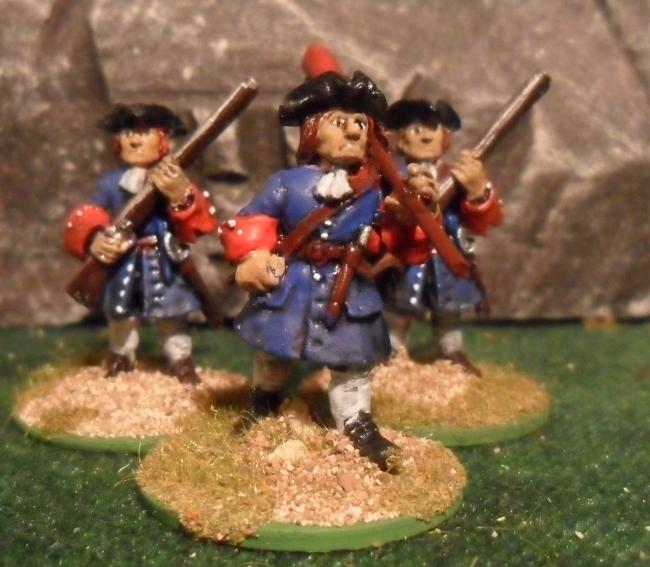
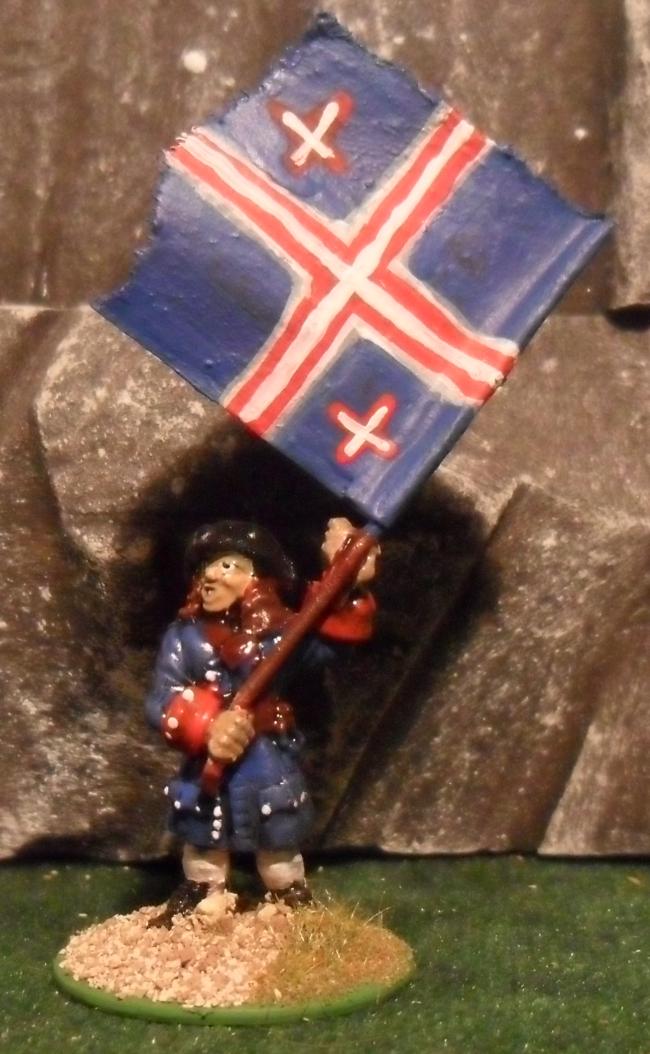
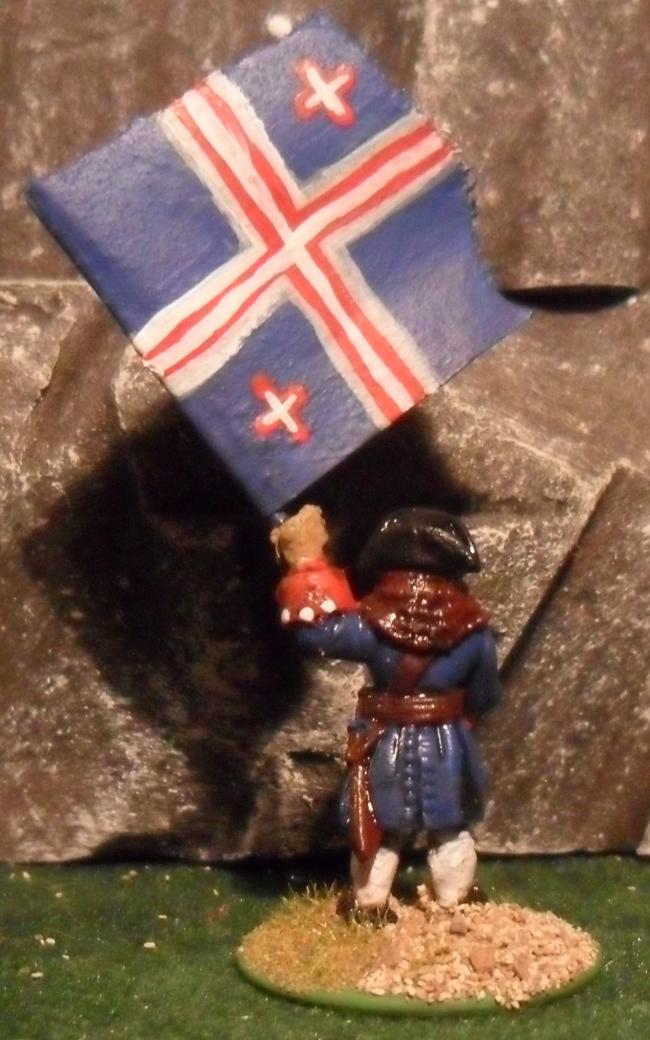
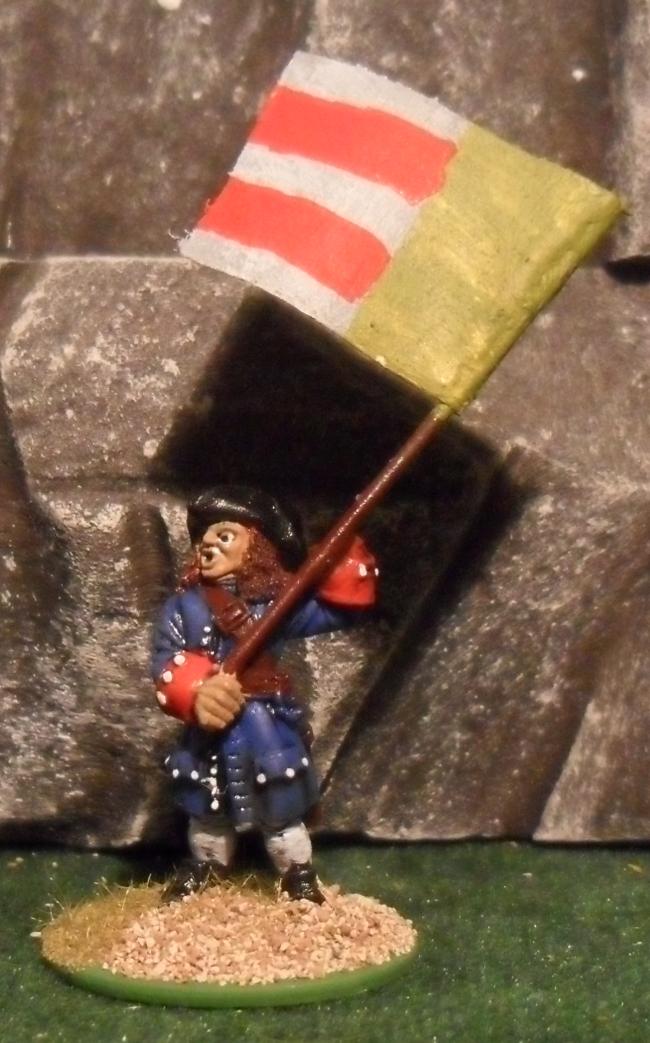
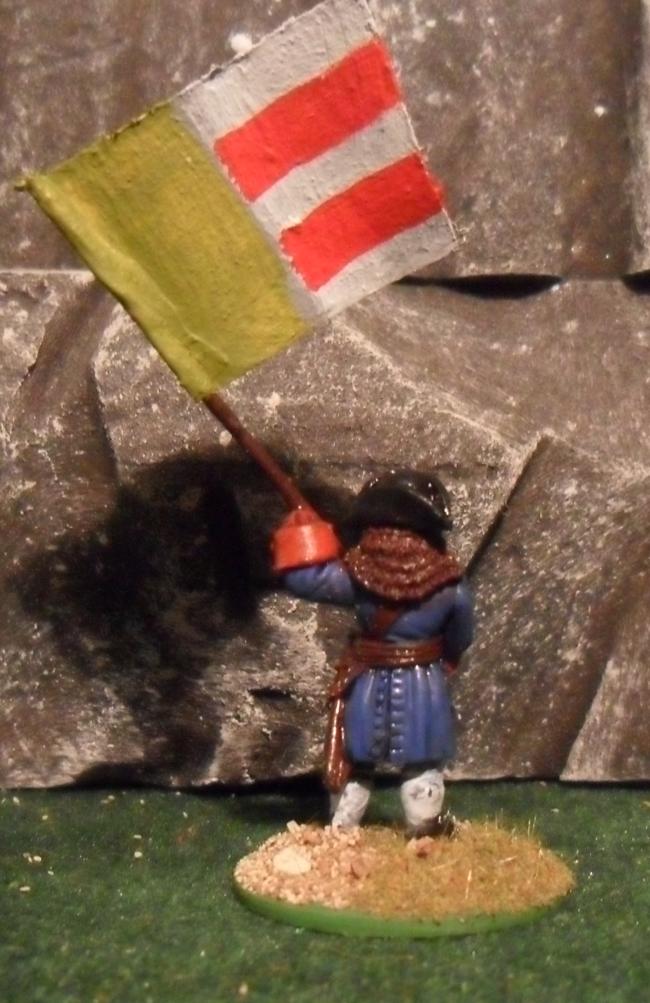
A few months ago, I won a small auction on EBay for a small group of Malburnian/War of Spanish Succession-era infantry (early 18th century). I painted them based off an image of a group of Spanish reenactors (see first image). The flags I painted to a personal liking, but I am thinking about redoing them to match historical units. I was originally planning on using them for the PaizoCon interactive, but as the interactive took form, I began to see less of a need for them. So... instead of PaizoCon they might make an appearance at Tacticon!


Sunday, February 12, 2012

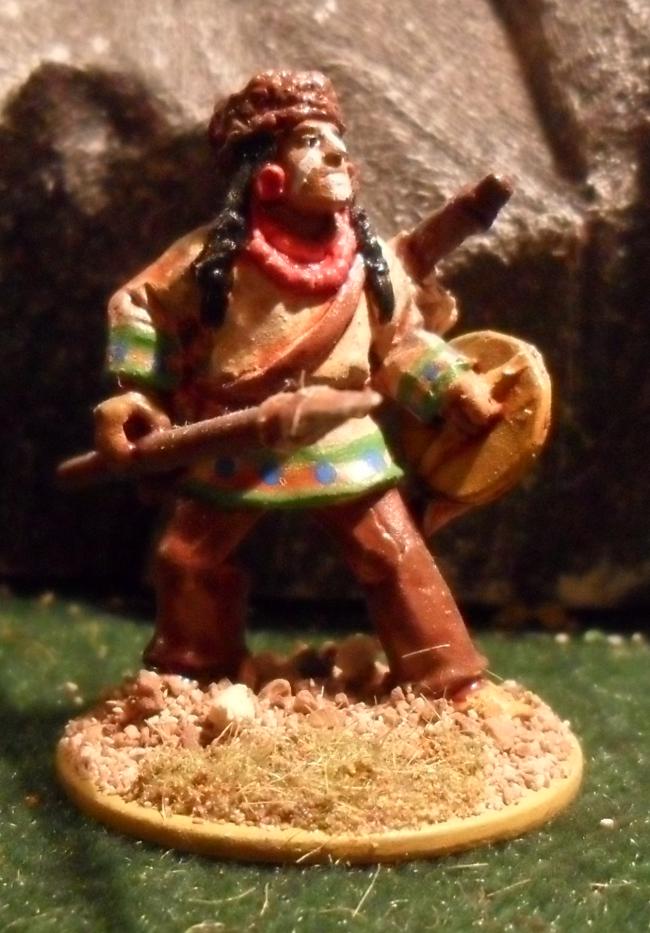
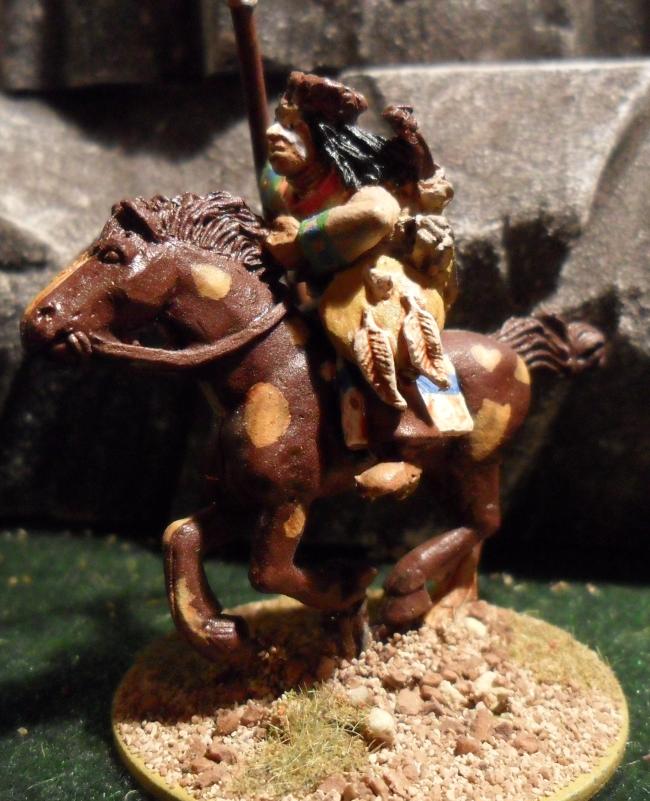
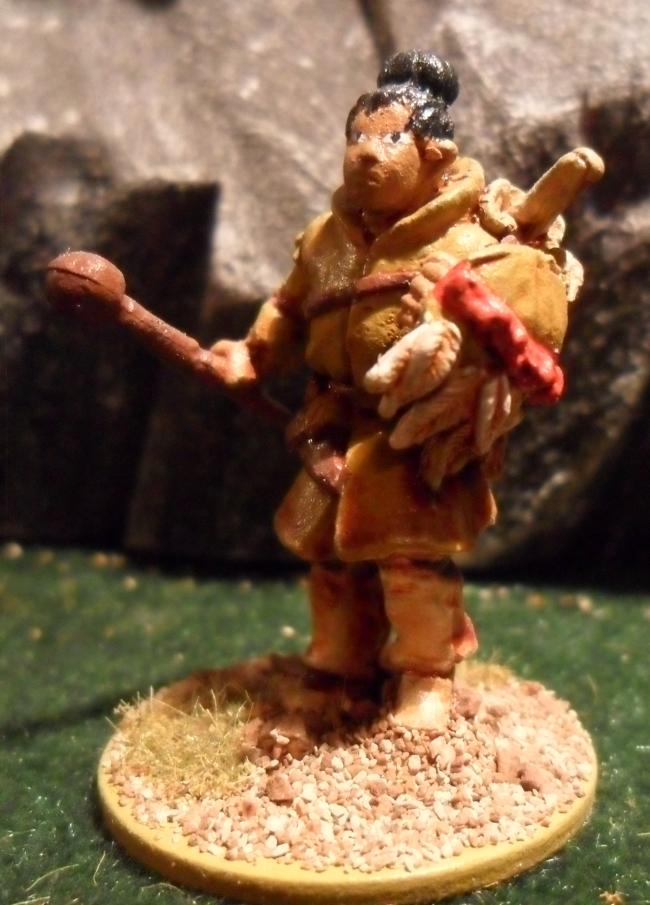
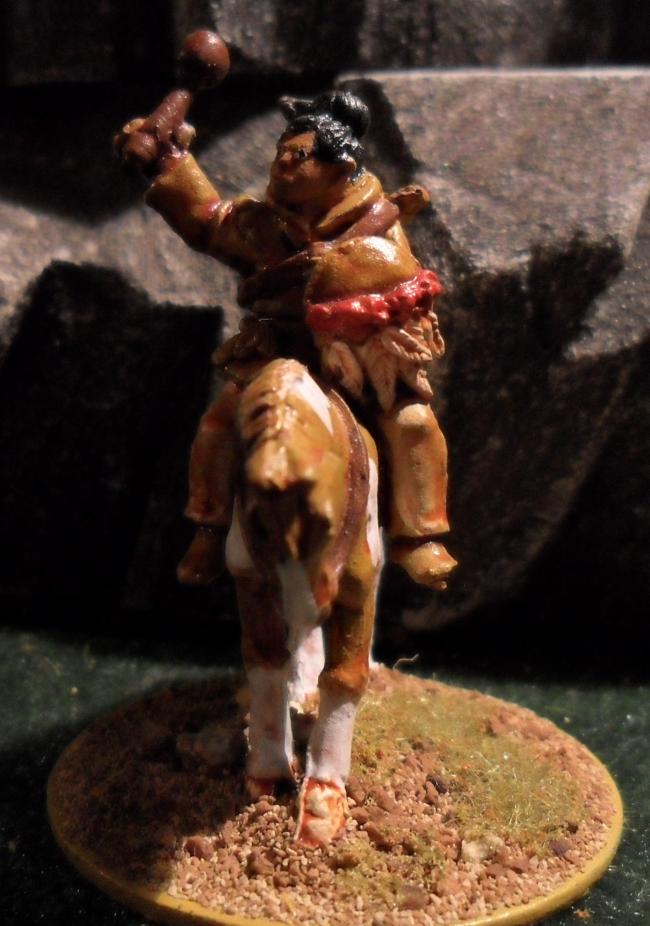
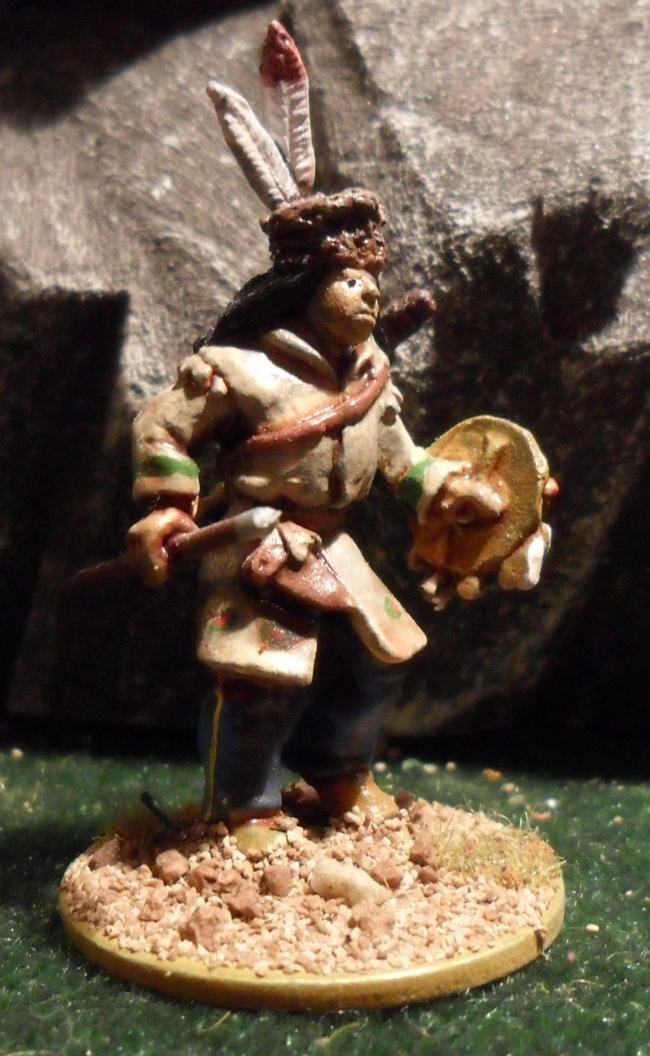
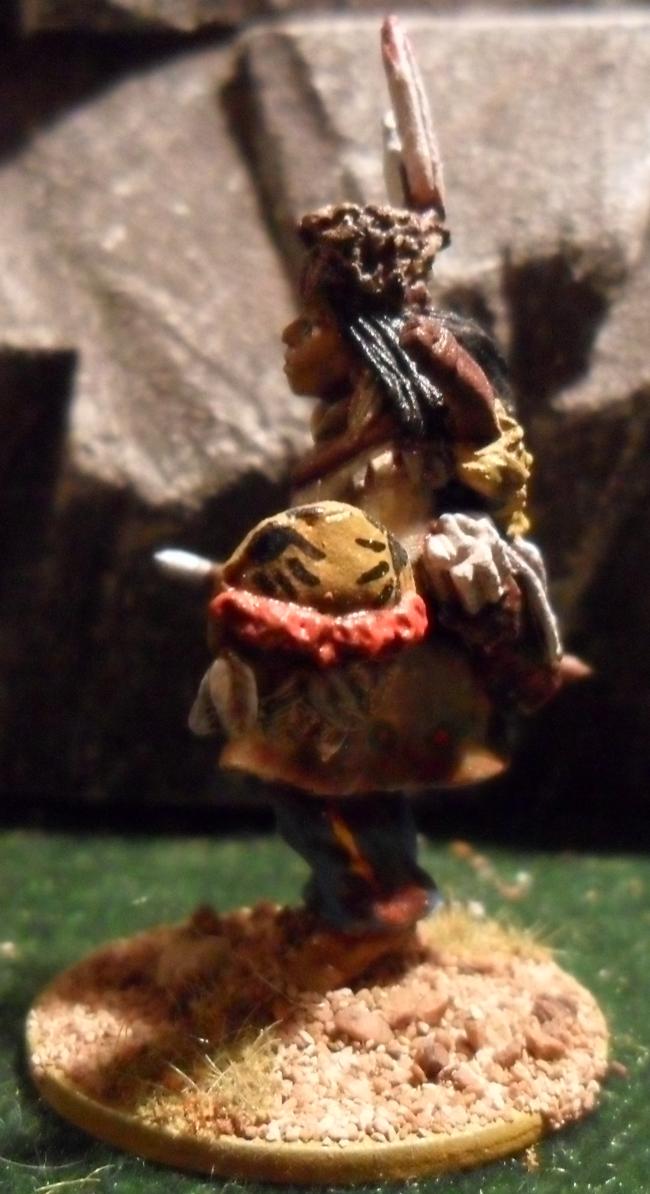
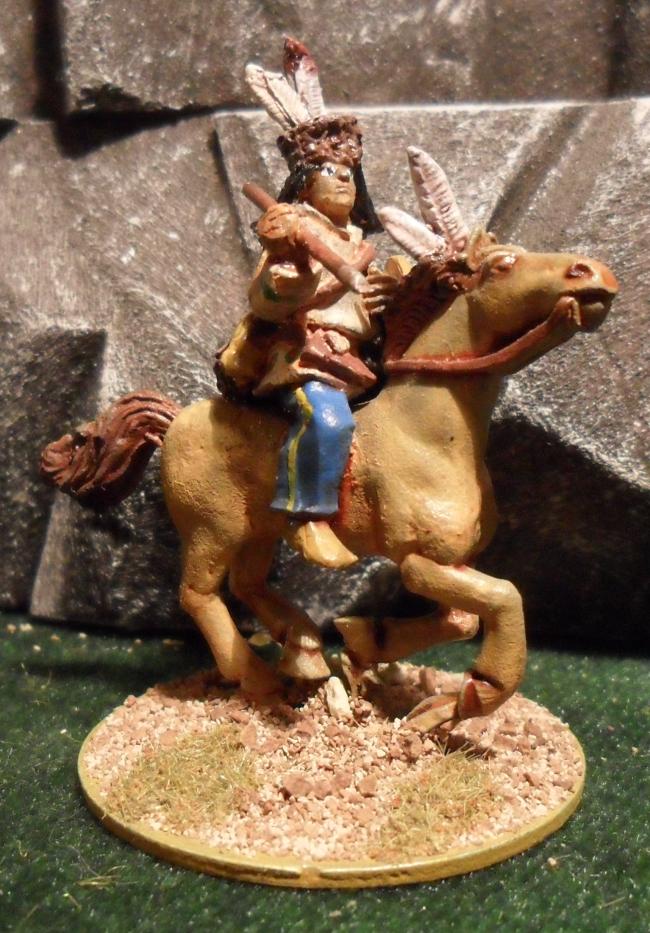
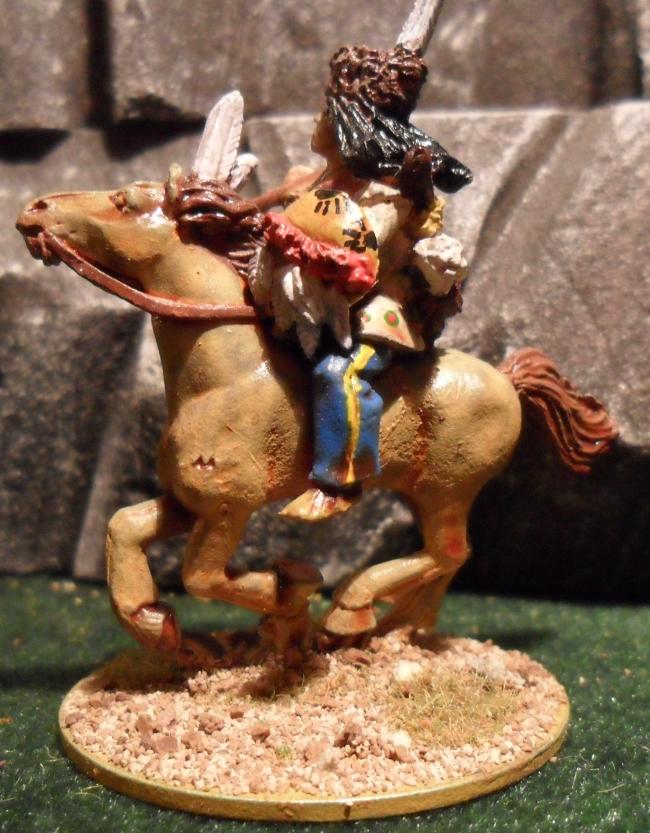
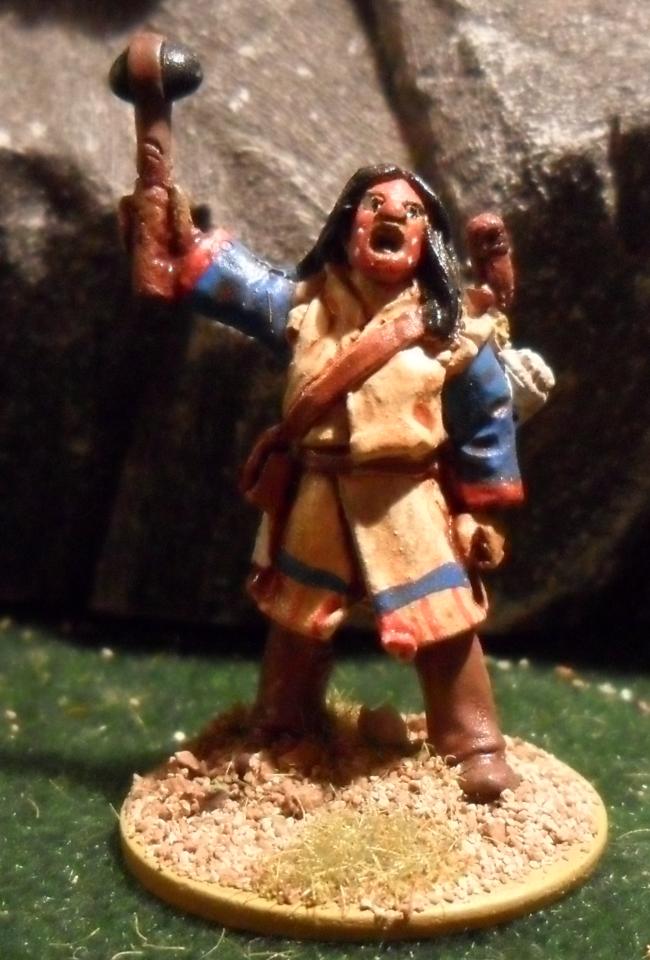
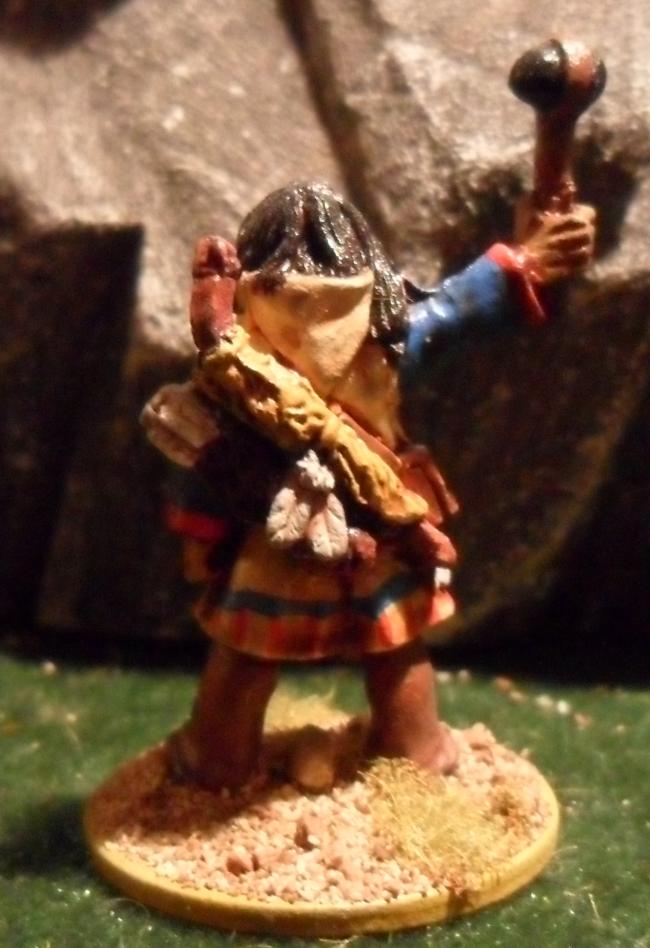
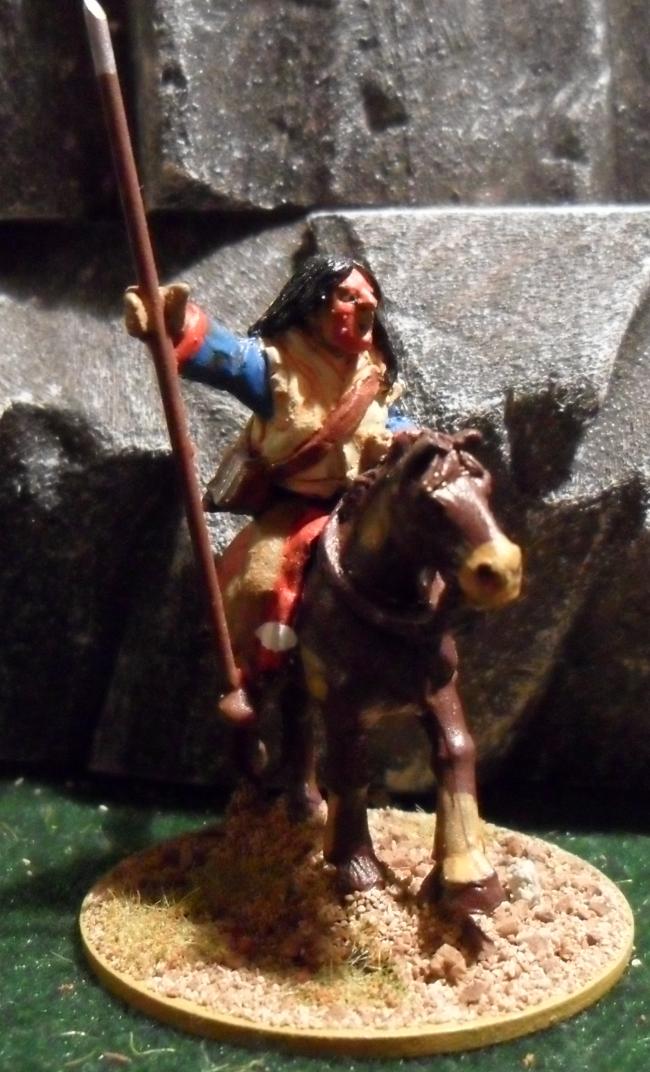
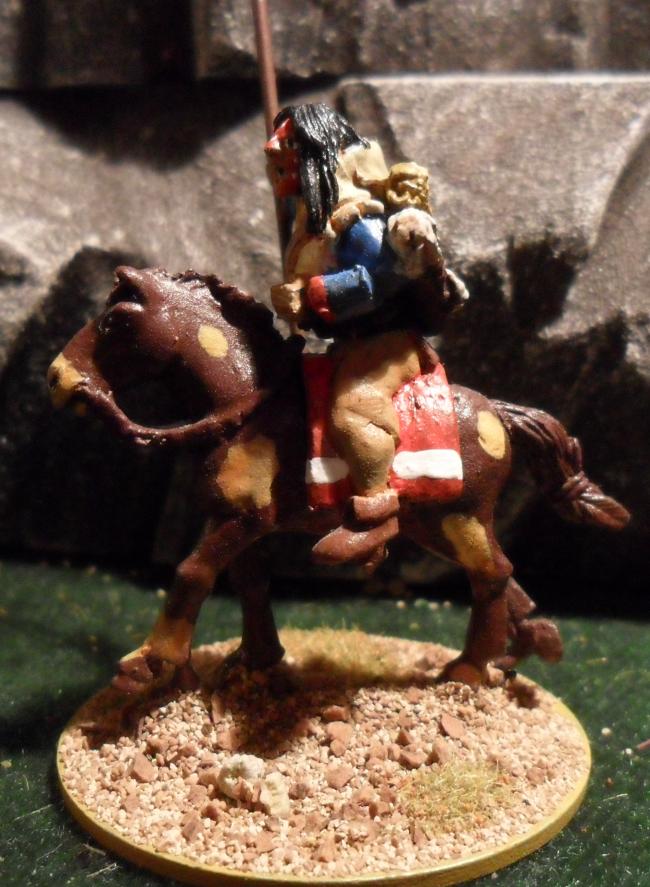
Northerns Plain Indians

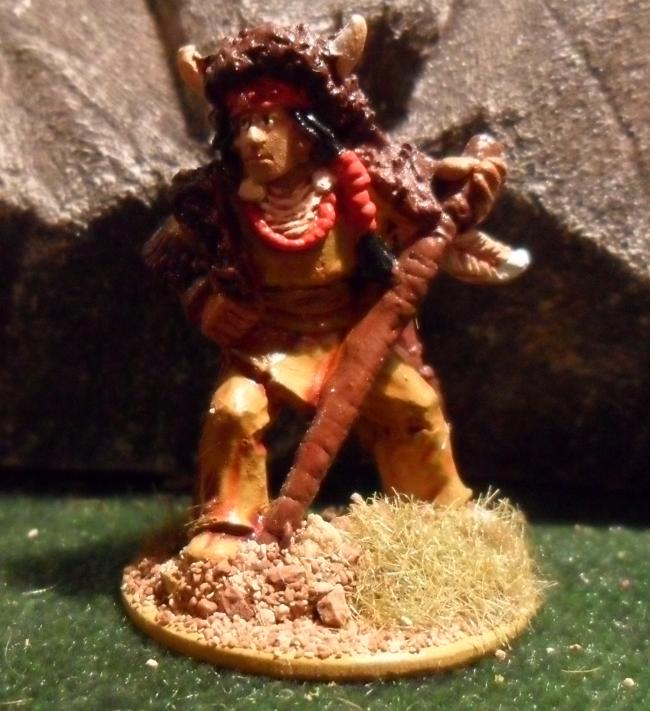
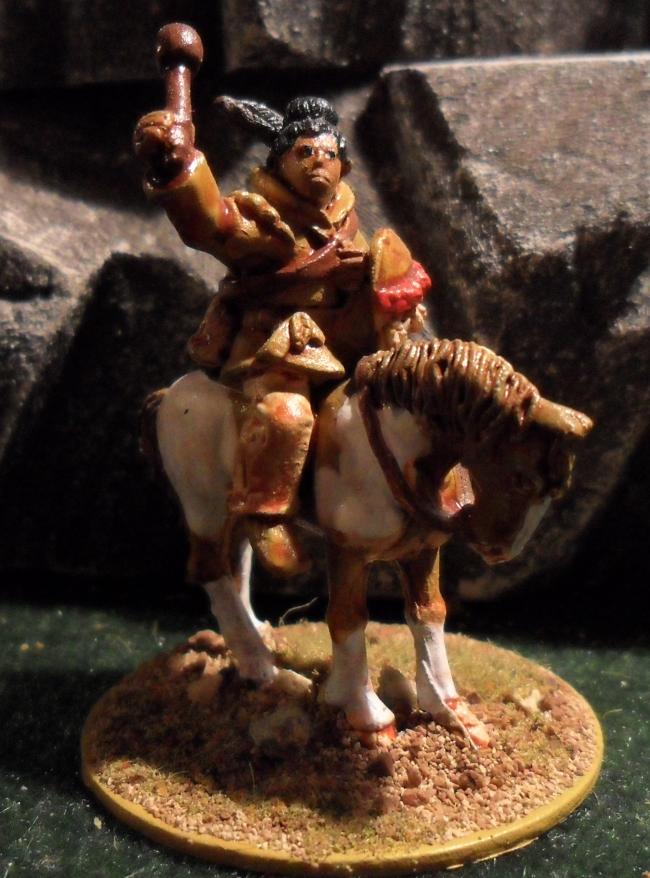
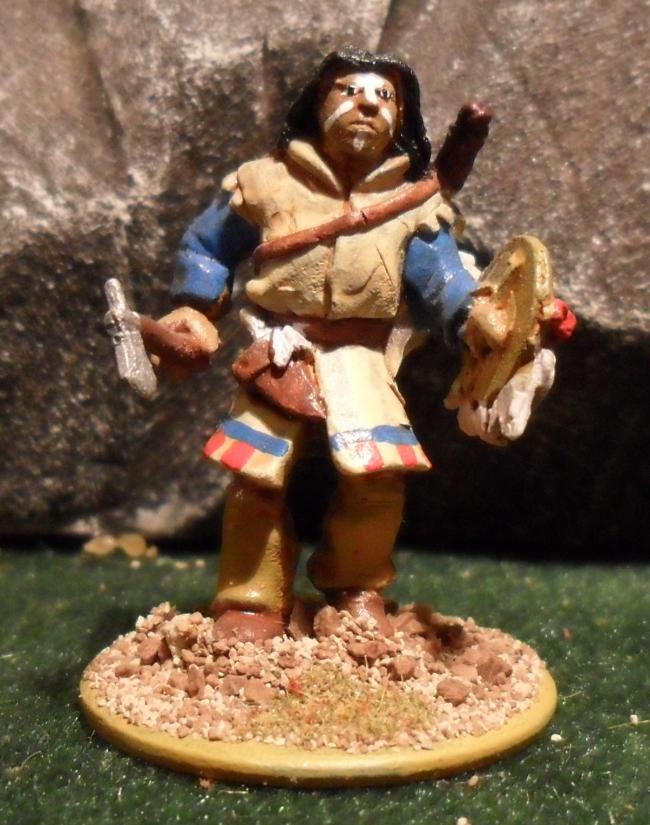
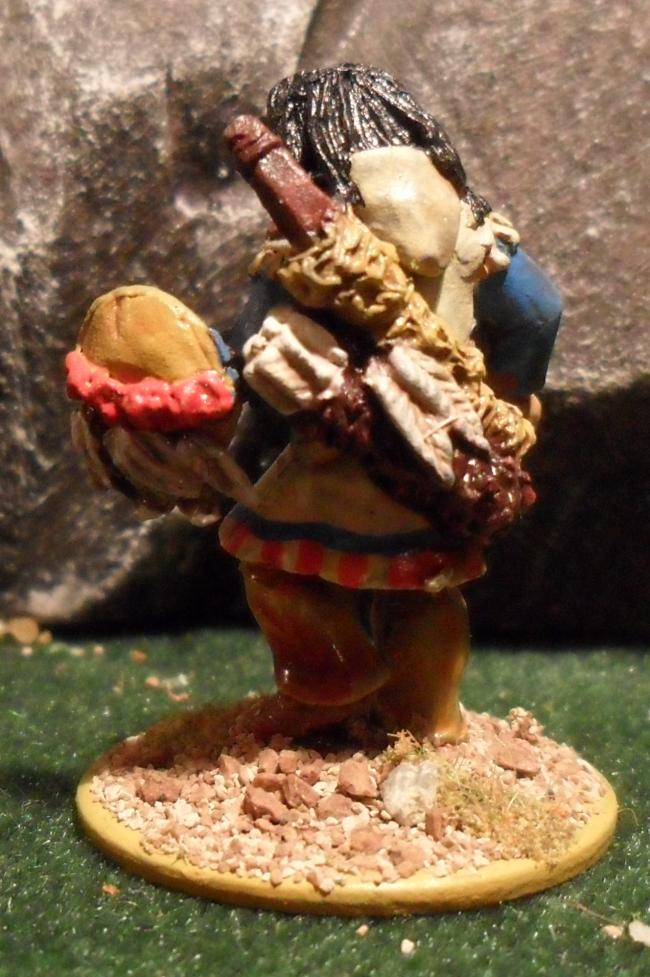
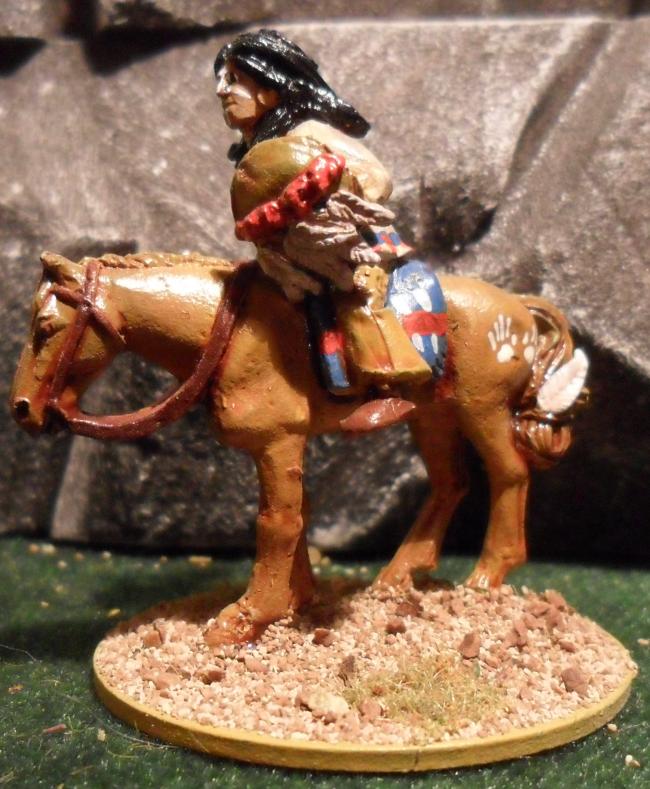
When I moved to Colorado, I naturally began looking at the history of the state and its history. Then at a Gamers' Haven's Auction years ago, I won a set of Warhammer Historical's Legend of the Old West and its Blood on the Plains supplement. BotP has rules to play Indians, which called to me. This lot I gathered and painted long ago, but left them on my "done" table for a while. My friend Nathan really hated me fielding any of the natives.

This is a band that includes mounted and dismounted versions of the characters that I plan to sell on Ebay in the next few days.


JP

Thursday, October 13, 2011

The Gods Hate Me

A while ago, I reported that I had sent in an entry for Chaosium's Adventure Writing Contest for Cthulhu Invictus (the Roman era CoC). Well it's been a long time. A very long time indeed... I sent my submission sometime in June or July of 2010! That was a long time coming... But better late than never! I have not yet received my copy of the monograph (and have sent a query to the good folk at Chaosium about it).

I am very happy to be counted among the list of winners, among which is my good friend Osk. I did not participate in 2011's contest, but plan to do so if Chaosium again hold an adventure contest in the summer of 2012.

My own submission used to be the first chapter in my Invictus Campaign. Yes, the one I abandoned. Why? It would've required 300 pages to explain what I planned to do and 500 to write the adventures themselves. However, there are a number of bright points in there. So I went through the original adventure, trimmed all the campaign-specific information and ended up with the final version. I was lucky enough to have play-tested that adventure twice. I really like it.

You can buy the monograph from Chaosium directly. Monographs are only available through them, not through your FLGS.

This monograph is the second Chaosium publication that features some of my own material (the other being 2009's BRP Adventures).

Check it out and let me know...

JP

Friday, May 20, 2011

Dreaming of becoming a writer...


Almost a year and a half ago, I wrote an article for Wargames Foundry and blogged about it. Somehow, the article seems to have been lost in the ether and I had lost hope in becoming a published war games author (much to my chagrin I must add).

Fast forward to this morning... To my great surprise and happiness, I have a message from Wargames Foundry asking me about the article. It lightened my day! Maybe my dream can be realized! I'll let you all know as soon as I have information to share.

JP

Wednesday, December 9, 2009

Diversifying: Writing Wargaming Articles

As most of you know by now, I have an intense love affair with history. The Roman Empire, 17th Century France, the French Revolution, the Napoleonic Era, the 19th century and the early 20th, hold a dear place in my heart. I read many things about the subject as a point of personal interest. My love of history extends into my other hobbies: role-playing and miniature gaming. I own an extensive collection of miniatures for most of the eras above.

When Wargames Foundry (a UK-based company that produces some of the best miniatures around) posted on their mailing list that they were looking for new writers to write miniature gaming, modeling and historical articles, the temptation was too strong and I sent my name.

I was very happy when, a few days later an email from Foundry popped up in my inbox with instruction and guidelines. I devoured the whole thing, had a look at their website for ideas. I did not wait long for inspiration. Hitting a few choice websites, books and wargames magazines I owned, I tried to find something about the Great Illyrian Rebellion. Although there was some information, I could find nothing I could take with me to a gaming table. My choice was made. It would be about the Great Illyrian Rebellion of 6-9AD. The conflict pitted the elite of the Roman Empire against the wild mountain men of Dalmatia (pretty much Yugoslavia).

At this time, I asked some friends to review my work and give me their impression, the Colorado Spring Historical Group and Linda chief among them. Reviews are positive so far. I can’t wait to submit the final draft. I think the article is solid, but I want to be sure.

More details later.

JP

Friday, August 21, 2009

Game system for this historical thing

Before I go into any more details about this topic, you have to know that any game system can support any adventure or campaign you can imagine. The caveat is that you need to know the strengths and weaknesses of the game system, and usually try to stick closer to the original goal of the rule set.

In this article, I’ll go over the three options I mentioned previously (insert Link). This post is not a critique of the game systems involved, but it might include partial rants...

Since the game is set in the medieval world, I will narrow my thinking to a number of game systems that use medieval fantasy as their base (no Star Wars or Robotech). I also want the game to be somewhat realistic (no D&D 4e). As an added constraint, I will narrow my thought to systems I enjoy.

I came up with the following game systems: Ars Magica, Basic RPG (which includes Call of Cthulhu Dark Ages), Gurps, D&D 3.5, Wizards and Warlocks, and the World of Darkness.

Ars Magica


The game everyone heard about but never played for any period of time... While AM is set in or around the right time period.
Pros The Grog system allows for a true troupe-style of playing where the PCs could play a large group of pilgrims and their leaders (the Companions).
Cons Ars Magica is an obscure game... Known to all, but REALLY known to few. Removing magic, takes away a lot from the game. The downside is that Companions must shift as focus which might be difficult in the middle of the action.

Basic RPG


I won’t hide that Basic (or BRP) is my system of choice for most home-grown ideas. It is rules-light and very fast-paced. With its emphasis on realistic combat, BRP is a ready-made for this type of thing. For a less gritty campaign, certain special rules must be put in place.
Pros fast-paced, simple rule set focused on what you try to do. It does have rules for allegiance and virtues (from Pendragon). Cons oddly enough, many people associate Basic = Call of Cthulhu and shy away from this great product. Also, the game can be very deadly.

Gurps


Now I’m not the biggest fan of the Gurps system. In fact... I don't like it. I feel it is outdated and overly heavy for my own tastes. Still, Gurps has provided a LOT of quality
Pros There are supplements for it! Okay. Not for the Crusades themselves, but you can use Arabian Nights, Middle Ages, Russia, Viking and even Fantasy (which is set around the time of the Crusades). So you have plenty of sourcebooks to allow your PCs to travel around. Cons I personally do not like the Gurps system. I find it cumbersome. However others could have different views about it.

D&D 3.5


3.5 could be used, but a severe limiting of classes has to be done: fighters, rogues, barbarians are all immediately at home here, but
Pros The combat system is detailed and covers a lot of options for the PCs. One of D&D’s best selling points is its notoriety. Every roleplayer knows about D&D. Cons The game is really balanced to have magic woven into the system. Removing magic does take away a lot of the fun of the game

Wizards and Warlocks


I’ll admit I never played this one, but I have played a few games of Mutants & Mastermind and found the game very fun and fast paced.
Pros Very much like D&D, but faster-paced Cons W&W is designed for Conan-style, fantasy super-hero games.

World of Darkness


Strip away all the vampires, the mages and the werewolves and you are left with a quality game system whose main strength is that it manages to offer quantify elements most other RPGs leave as intangible through the Background. The Dark Ages line has a number of ready-made
Pros The social system is well-detailed and easy to resolve. The Backgrounds allow the PCs to "know" if they are rich, noble or have friends at the start of the adventure. Cons Some elements of combat are clunky when not dealing with supernaturals.

Finally


Any of the systems above could work and support the campaign with some minor changes or house rules but my intent was to keep the rules as close to standard as possible.

A historical campaign is not the elusive Holy Grail or the horrible class book horror many think about when they hear or think "history".

Friday, August 14, 2009

Putting it together: The Historical Campaign

Enough theory, let’s try to put together a mini-campaign. My goal here is to run a short campaign set in the Holy Lands at the start of the Crusades (say 1100AD). At the start of the campaign, I want to set the basic tone. The King of Jerusalem, Godfrey de Bouillon was crowned last year, is 42 years of age and is currently mounting an army to attack Damascus (he will die on his way back from the expedition).

Looking at the background, I could see King Godfrey, known to be a very pious man, calls upon a group of servants to perform some task for him. Say… Find a lost scroll believed to have been written by St Stephen, the first bishop of Jerusalem.

So the main elements for my campaign are: The Crusades, The Saracens, and Other Crusaders. Let’s see how we can use those.

Option #1: Good Christians vs. Evil Muslims


A common stereotype is the fact that people in the middle-ages were “stuck” in their life stations, a serf was a serf forever and a knight lived in luxury all his life. In my campaign, I will showcase that the Crusades served as a springboard into nobility for many courageous or resourceful individuals.

I plan on portraying the Saracens as evil, devious and twisted individuals who seek to kill every Christian they encounter. In contrast, the Christians crusaders will be depicted as highly devout and humble believers in Christ. Those depictions are *FAR* from realistic, but they should serve the campaign well by creating an “us versus them” conflict.

There you go, I have a theme, a basic idea and immediate conflicts for the PCs to navigate. I also have a basic concept for the players to create characters by.

Option #2: Shades of Grey


As another option, using the same premise (King Godfrey sends the PCs to find the scroll of St Stephen), I could decide to display the Saracens and Christians as “the two faces of a coin” where both sides are gripped by zealotry and a number of people manage to find common ground and accommodate each other.

One of the theme I would like to explore would be the impact such a text would have upon the Kingdom of Jerusalem. Some will want to make it disappear, other want to use it to promote warmongering and yet others will try to doubt the PCs and their claims about the text.

Here the PCs could be pretty much anyone. They could be Saracen or Frankish peasants, warriors, merchants or pilgrims. This type of “shades of grey” campaign does allow for greater versatility. Like all shades of grey campaigns, be careful that the PCs’ motivation for staying together is greater than the dissention. More on that in a later article…

Option #3: Inner Politics


Instead of breaking the stereotype of the serfs being stuck as serfs, I wanted to have the PCs involved in the Byzantine politics (yes, the pun is intended) of the Crusader states. On the one hand, the Pope and the West, the Byzantine emperor (Alexios Komnenos) and the Crusader States themselves. Show that all those influences’ common goal, the taking of Jerusalem, had been accomplished and they now squabbled together.

Here, the Saracens would serve as a looming threat ready to pounce at any signs of weakness, but the day-to-day enemies are over-ambitious Crusaders.

Noble PCs, such as knights and ladies would serve the story better.

Finally…


There you go… using the simple goal of finding a lost book I came up with 3 options on how to build the campaign. All three campaigns are based in a deep historical feel but showcase different things and themes. By working with those themes, you can expand the campaign more and more.

Why I could even see someone start with option 1 where the PCs try to find the scroll then shift to option 2 once they have it and finally shift to option 3 to conclude. The possibilities are endless. Since my goal was a short mini-campaign, however I would stick to just one option. Sticking to one theme allows exploring the theme better. In a sequel mini-campaign, different theme can be touched. It makes each such campaign have its own flair. If you read my many postings about adventure writing, you know by now that I am definitely into those “begin-middle-end” campaigns and again I will advocate this here.

I’m sure by now you are thinking. “That’s all good but what rule system should I use!?” A good question indeed, but something I’ll expand upon next time!

Thursday, August 13, 2009

Thoughts on historical campaigns...

It’s no surprise to most people who know me (even from afar) that I am a “gamer-historian” and that history has a great appeal to me both as a game setting and as a source of inspiration to write or run RPG adventures but also to paint and play historical war games.

I’ve trimmed down my library of game books significantly over the years to “limit” myself to those sourcebooks I either find essential, inspirational or things I can’t throw out. Too many moves have led me to become very choosy in what I kept and what I was giving up… Thus, I have every Call of Cthulhu books I purchased (except a few modern, non-Delta Green ones whom I dislike), along with Gurps sourcebooks (I never seriously played Gurps, but I own like 15 supplements), 40k Codices, the old D&D Green-cover historical books, my main D&D 3.5 stuff and the Rolemaster historical. There are a few “one-off” games I kept like Werewolf: The Apocalypse, Werewolf: Dark Ages, Warhammer FRP, and some D&D adventure with some personal significance (Egg of the Phoenix) or war gaming rule sets. As you can see, pretty much everything in there has a historical feel to it (or is historic because they’re so old).

I go through my stuff on a regular basis, rotating them and reading small bits and pieces, trying to come up with new ideas. Some of books are falling apart from over-reading like Gurps Swashbuckler, Gurps Japan and Rolemaster’s At Rapier’s Point.

How do you go from the book, the research and all the trivia to the game table without turning the game into a history lesson very few of your players want to hear? Well, to be honest, it’s not easy. I turned many great ideas into games that were less than satisfying. There is nothing worse than to prepare a great adventure and a story that excites you turn into a big farce.

Yup, it happened to me many times, I should’ve read the signs and acted upon it.

What has experience taught me?

  • Feel is more important that Fact. It’s a game and if you want to recreate history perfectly, write a novel!
  • Stereotype you want to change should be clearly mentioned. If one of the main themes or ideas you want to break in your campaign goes against an established stereotype.
  • Stereotypes are your friends. If you wish to redefine the roles of everyone throughout the campaign, run a fantasy campaign. Use stereotypes and pre-conceived ideas found in movies, popular culture (everyone from Eastern Europe speaks like Bella Lugosi) and TV.
  • Encourage research through fun. Players who enjoy a campaign and know it is set in a historical campaign, might go look up a few things.
  • Know your stuff. This is the one that is most difficult. Know your stuff means that you should have a decent idea of who the main NPC are. If set in France, it’s important to know who the king and his immediate family is (the Dauphin, the Queen). This one is important because it helps to reinforce the historical aspect. “The Game is set during the reign of Philippe the First of France”. Philippe’s reign was marked by the rise of Normandy (William the Conqueror was Philippe’s vassal as Duke of Normandy). Philippe’s reign is also marked by scandals and a growing royal administration.